A Hike to Khardung Tso (5100m)
While staying in Leh, Khardung Tso had been on my list for quite some time. I had planned to visit it on an earlier trip but never got the chance. After completing the Markha Valley trek and crossing Kongmaru La, I was comfortably acclimatized around 5000 metres, so it felt like the right opportunity to finally visit the lake.
Khardung Tso sits at an altitude of around 5100 metres. Although the hike itself is not very long, the route climbs to nearly 5400 metres before descending to the lake. At this altitude, even short distances can feel demanding, and I would only recommend the hike to those who are properly acclimatized.
A day before leaving Leh, I was discussing plans with Gagan and mentioned that I wanted to visit the lake before heading home. He was interested and well acclimatized too, so we decided to start early the next morning.
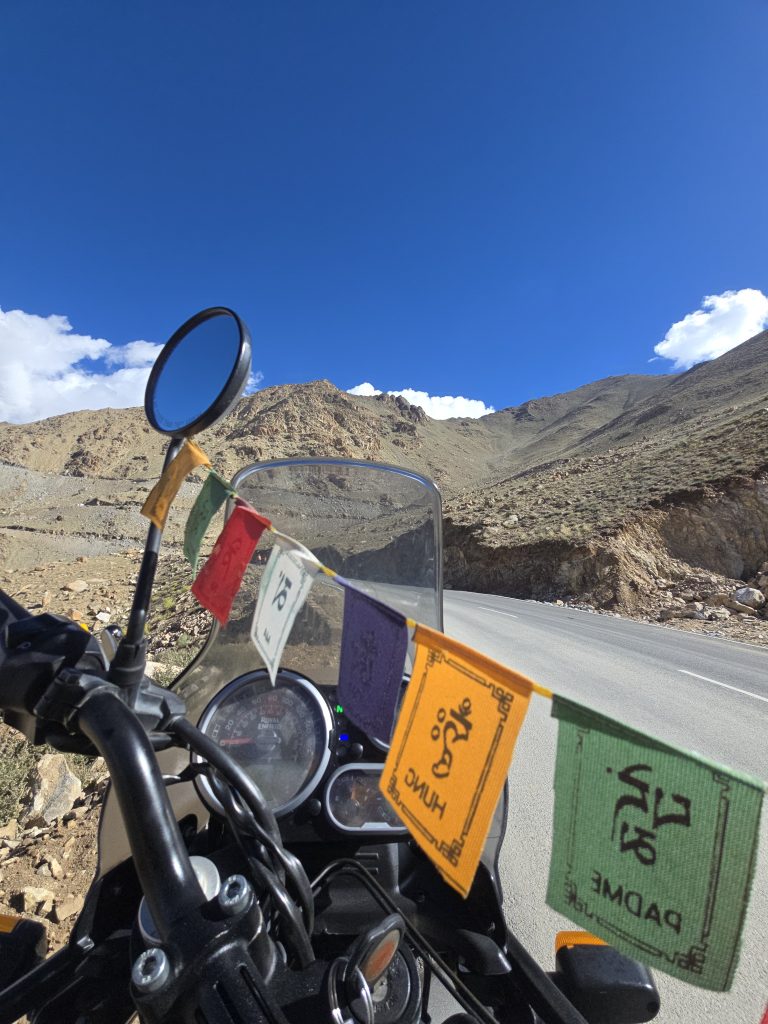
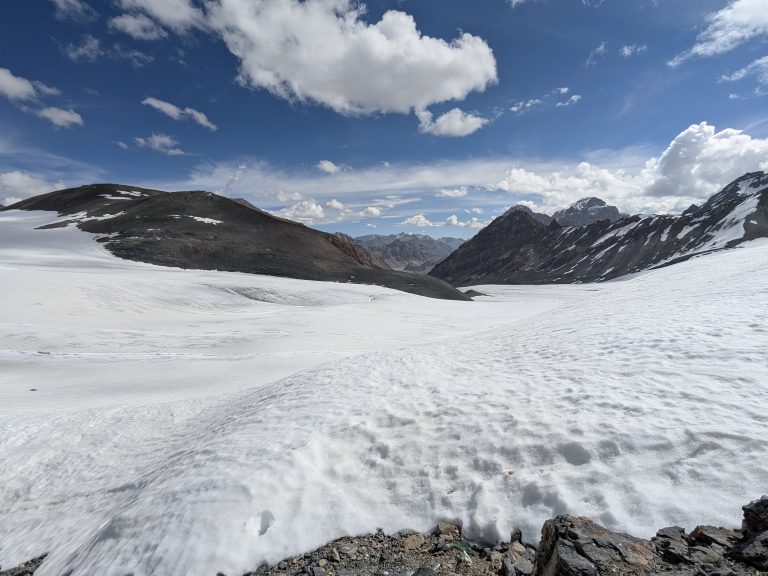
The ride itself was beautiful. As we approached the roadhead, it was clear that fresh snowfall had covered the mountains recently. The route initially followed what looked like a straightforward road heading towards the higher valleys, but the further we went, the more the snow covered the landscape. Soon, the road disappeared beneath a white blanket and the route ahead became less obvious.
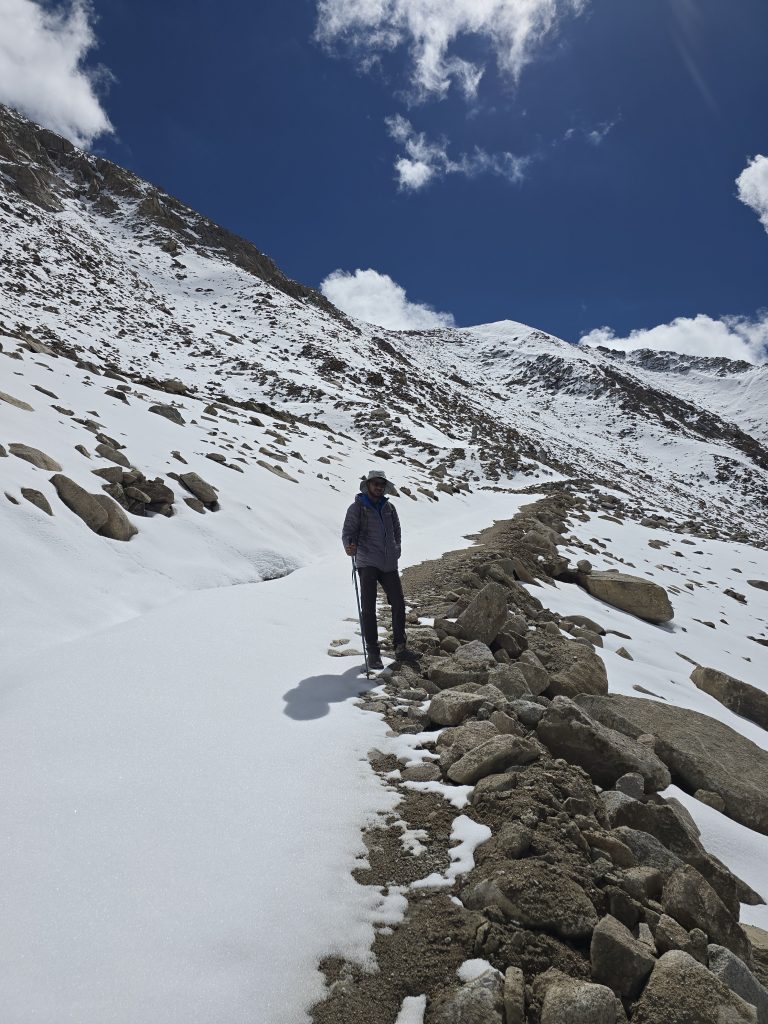
Progress was slow from the very beginning. At over 5000 metres, there is no rushing. We gained barely 300 metres in almost two hours. Every step required a little more effort than expected, and frequent pauses became part of the rhythm of the climb.
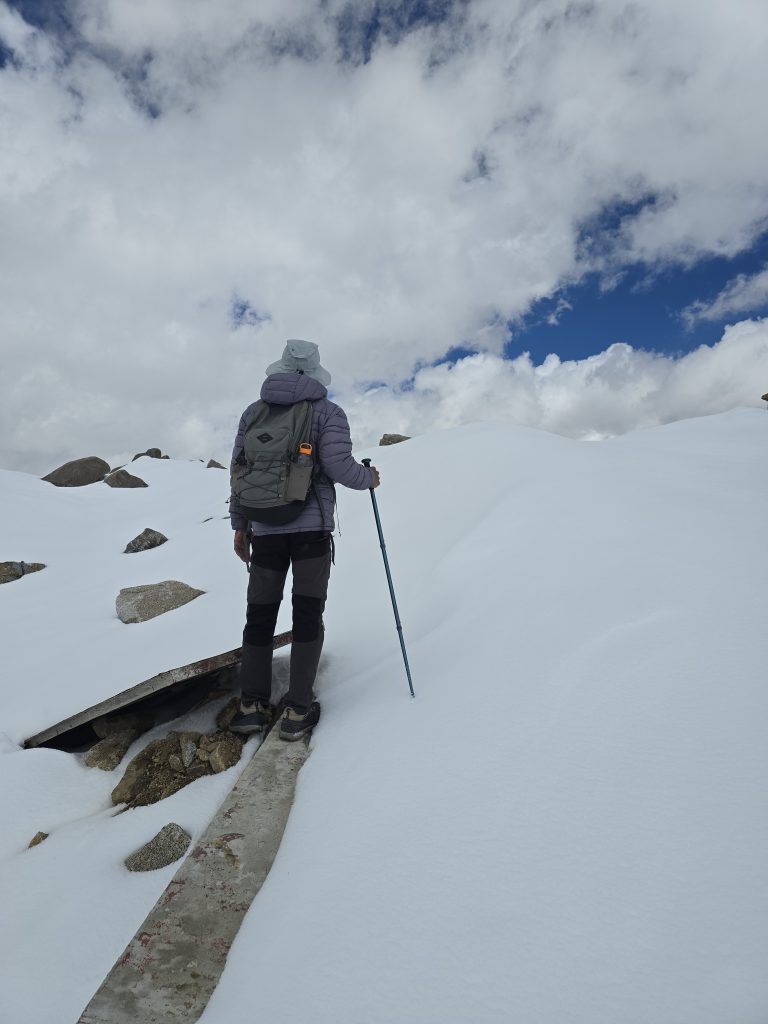
Eventually, we reached the saddle.
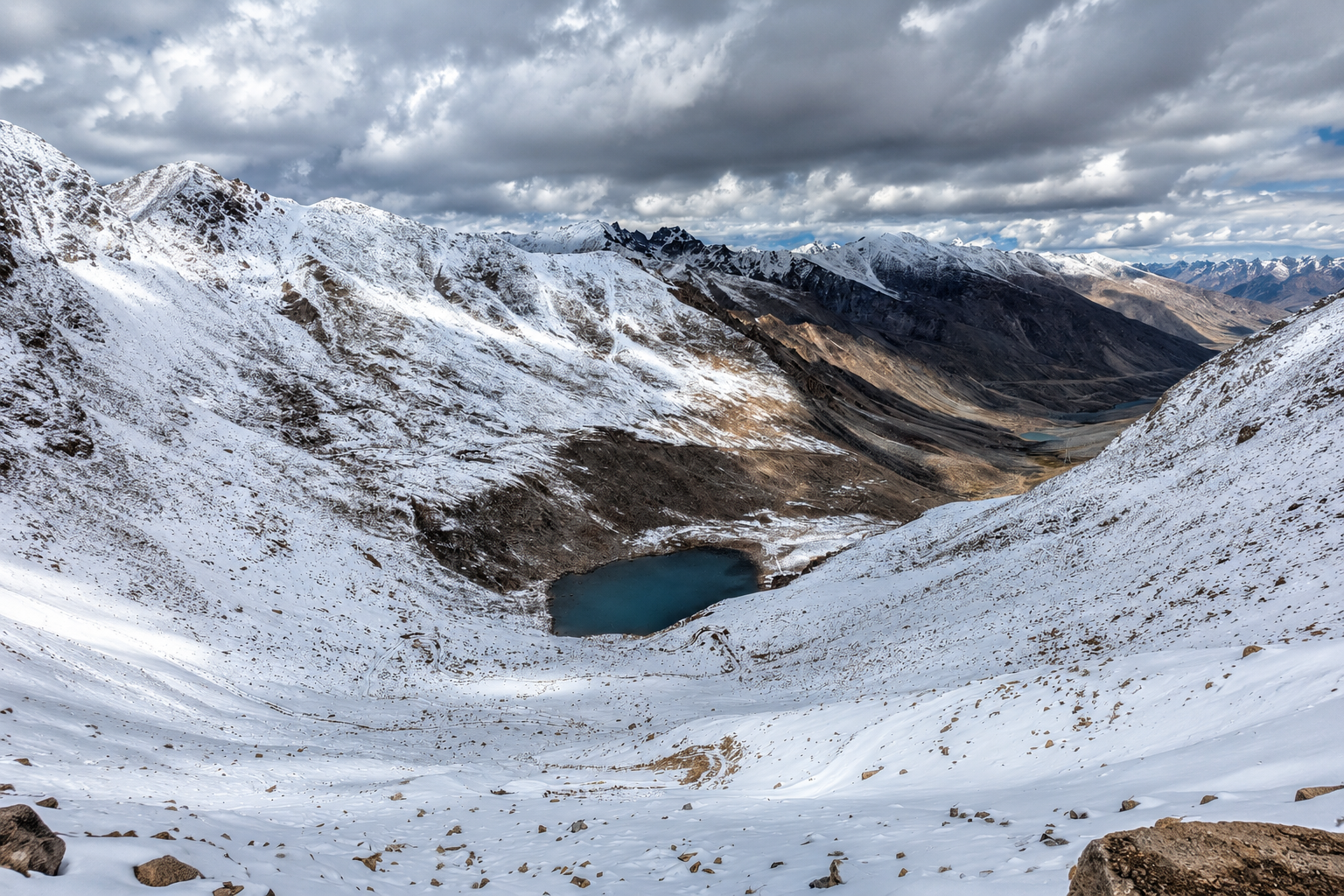
As soon as we crossed over, Khardung Tso appeared below us.
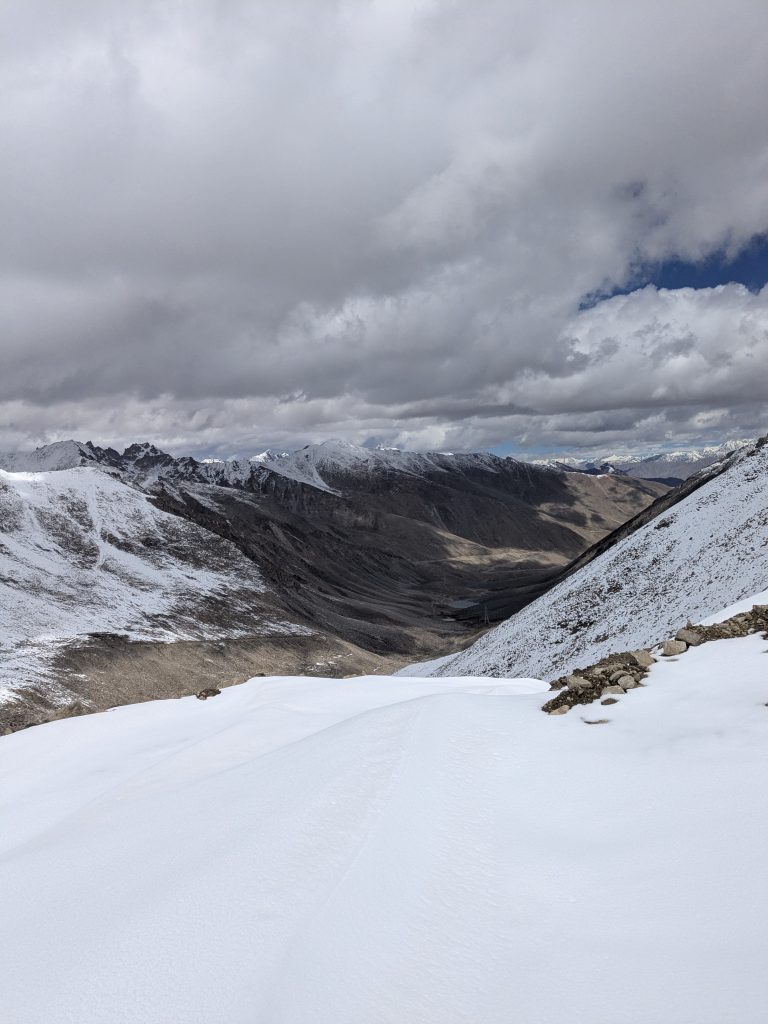
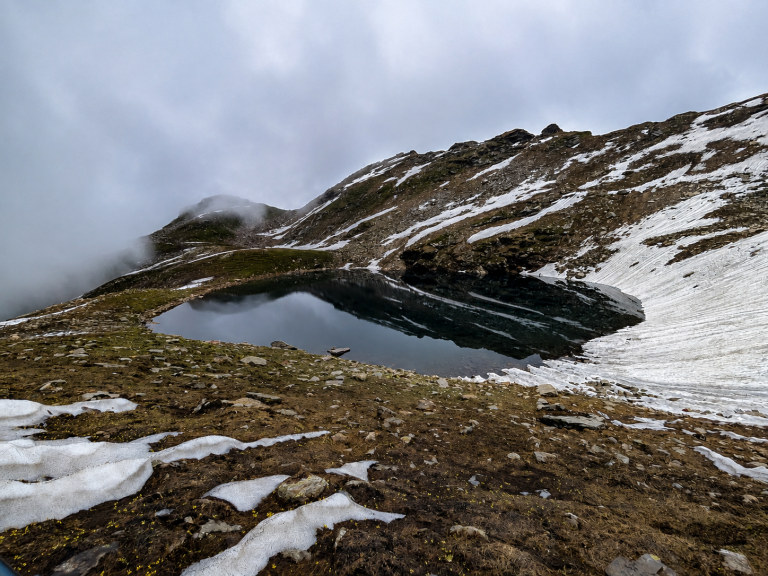
The lake was surrounded by barren mountains dusted with fresh snow. The contrast between the deep blue water, the brown mountains and the white patches of snow made for a spectacular sight. Despite its proximity to Leh, the place felt remote and untouched.
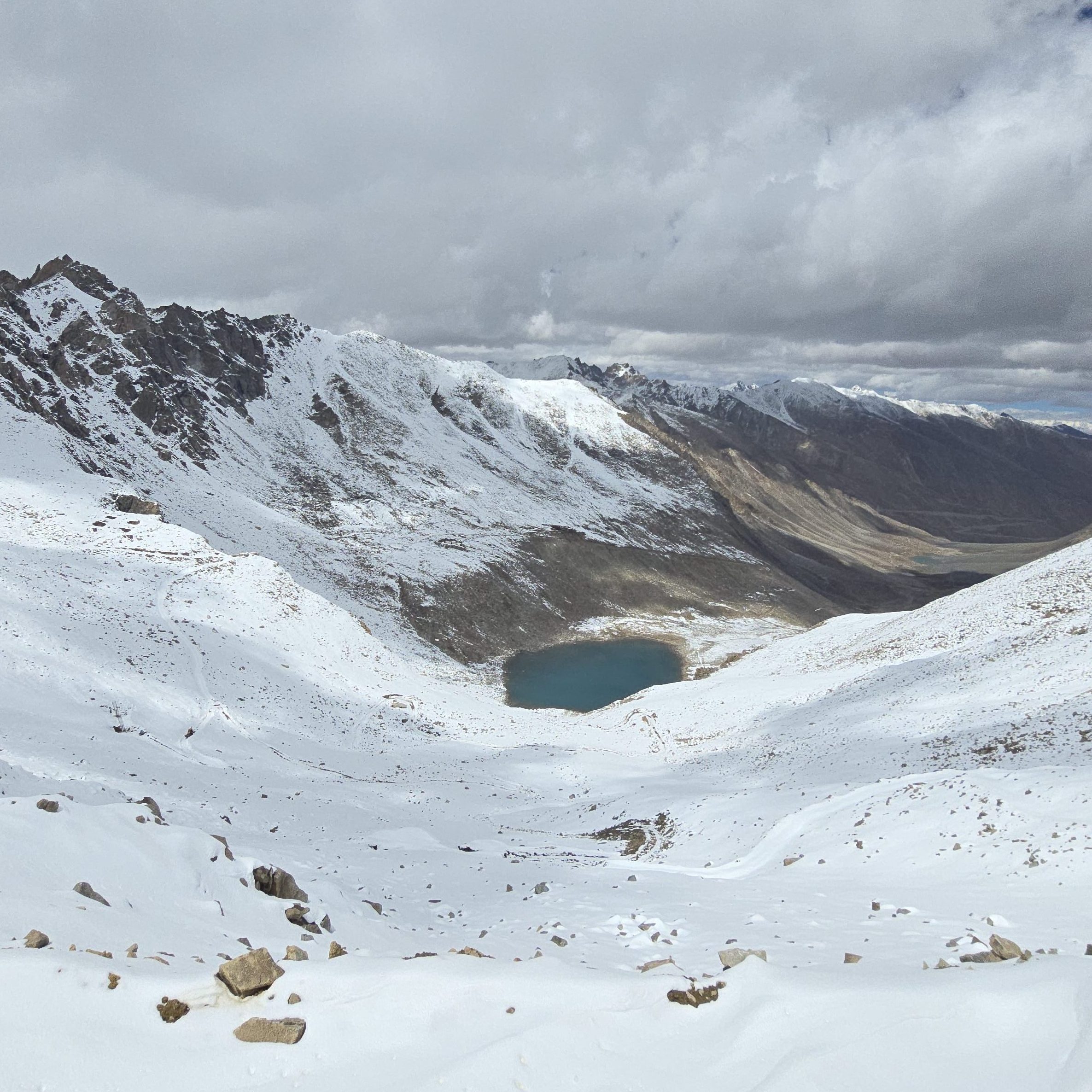
We spent more than half an hour near the lake, simply taking in the surroundings and enjoying the silence.
From the lake, we could also see road construction work underway in the valley. It looked like a route was gradually being developed further towards the lake, and it seemed likely that access to the area would become easier in the coming years.
After returning to the bike, we realised we still had time to spare. Since we were already in the area, we decided to continue towards Khardung La.
During the ride up, Gagan mentioned that he had started feeling a mild headache. At these altitudes, even a small symptom deserves attention. We spent only a few minutes at the pass before turning around and descending back towards Leh. The headache never became serious, but it was a good reminder that the mountains always have the final say.
Looking back, Khardung Tso turned out to be one of the most memorable hikes of my Ladakh trip. Not because it was difficult or remote, but because of the setting. A quiet high-altitude lake, fresh snow, clear skies and very few people around. Sometimes that is all it takes to make a place special.
A Small Historical Note
Most travellers today know Khardung La as the famous pass connecting Leh with Nubra Valley. However, the original historic Khardung La used by ancient trade caravans lies slightly east of the present motorable road. The route now used by vehicles was traditionally known as Som La, though over time it became widely identified as Khardung La.
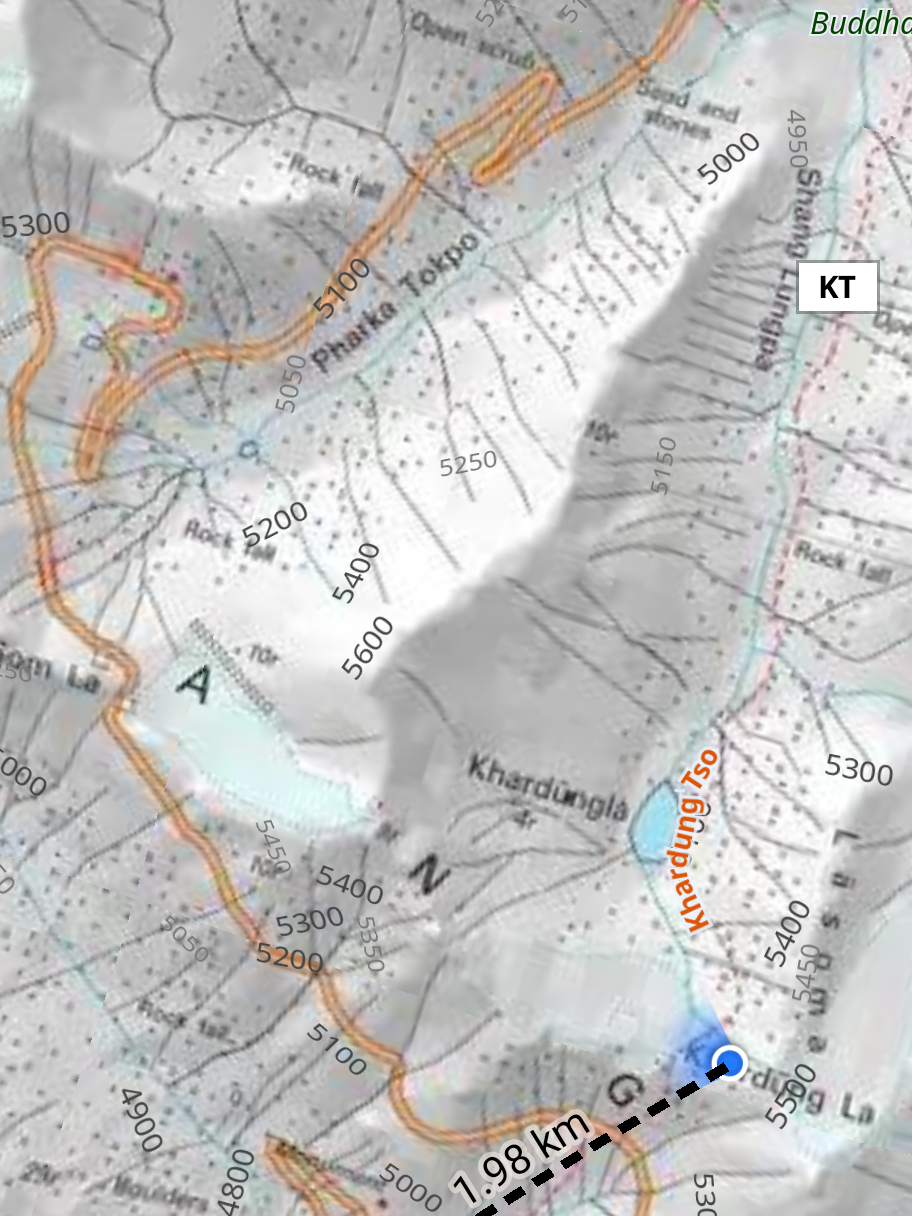
Khardung Tso lies below this original historic pass, and the saddle crossed during the hike forms part of the old trade route once used by caravans travelling between Leh and the northern valleys.
Disclaimer: This hike is above 5000 metres and should only be attempted after proper acclimatization. Acute Mountain Sickness can affect anyone regardless of fitness.
Similar Posts
Miyar Valley: I Went Alone, But I Wasn’t Really Alone
Crossing Parang La (5580m), One Day at a Time
Rupin Pass: The Trek That Taught Me How Goodbyes Feel
Related Treks
Parang La (5580m)
Hampta Pass