Rupin Pass: The Trek That Taught Me How Goodbyes Feel
There’s a particular kind of nervousness that comes before your first snow trek. It isn’t the fear of mountains; it’s the fear of the unknown week ahead. How cold will it get? Will my legs hold up? Will I like the person I become when there’s no phone signal and no way back except forward?
I signed up for the Rupin Pass trek to find out. I’d never done a snow trek before, so I chose mid-May as the safest bet. The temperatures wouldn’t be as brutal as they get in winter, but there’d still be enough snow to make it feel like the real thing
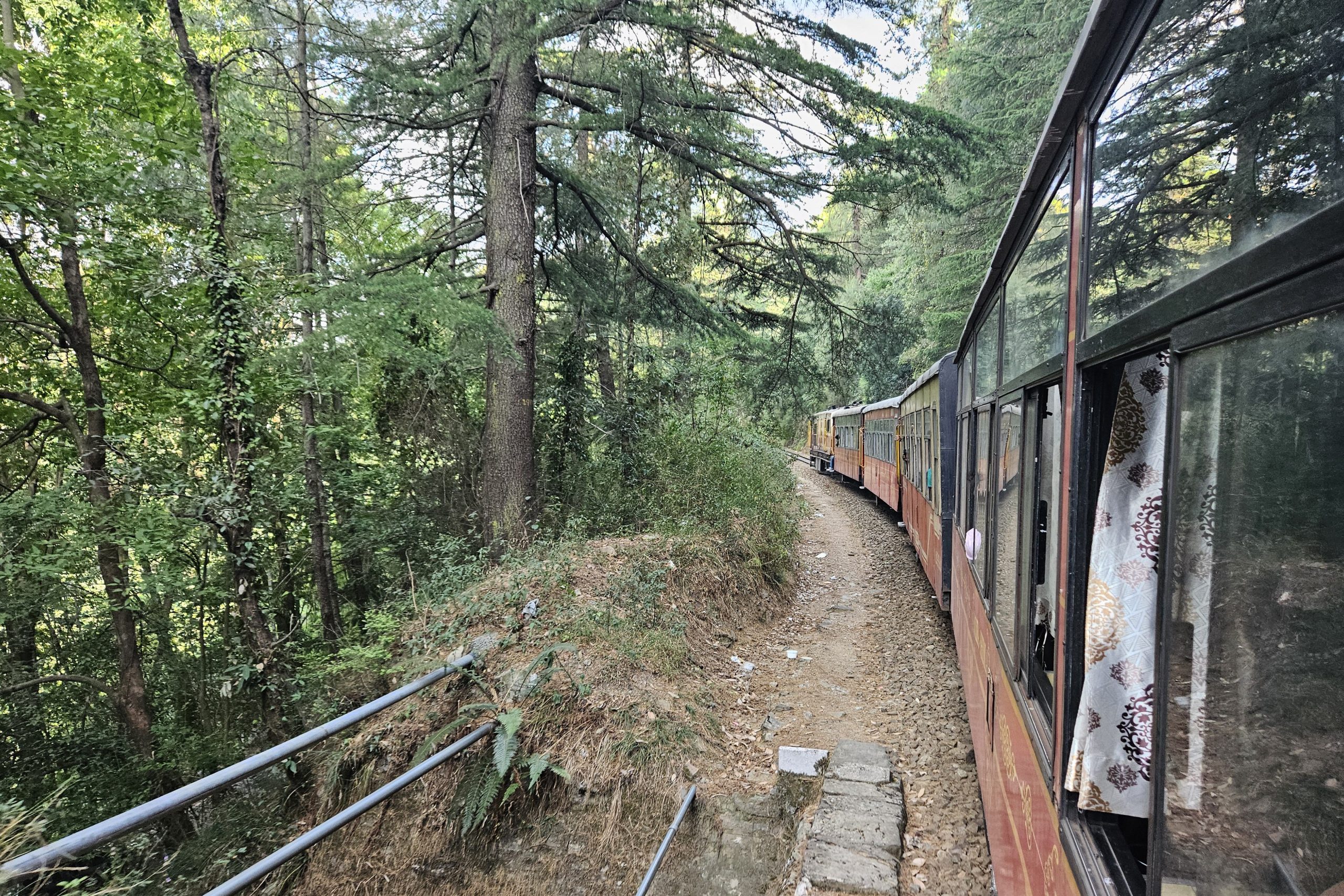
The journey began with a toy train from Kalka. I boarded expecting a quaint little ride to Shimla. What I got was something slower and strange in a way I hadn’t expected. The train doesn’t cut through the mountains so much as negotiate with them, threading through over a dozen tunnels and bridges, hugging pine-covered slopes at a pace that makes you forget you’re supposed to be somewhere. My legs ached to stretch, my patience wore thin more than once, and yet I enjoyed every bit of it. I wouldn’t recommend it if you’re in a hurry. But I’d recommend doing it once.
From Shimla, we made our way toward Rohru, our base before heading into the Rupin valley. It was my first time on this side of Himachal, and like most group treks, there was that initial curiosity of figuring out who I’d be spending the next week with.
I had connected with Ambuj weeks before the trek, and when we met in Shimla, we just clicked. No awkward introductions, no trying to figure each other out. At that point, I didn’t know how the week would unfold. I didn’t know how difficult the trek would be, or what memories would stay with me. But I knew I had a buddy.
Jiskun
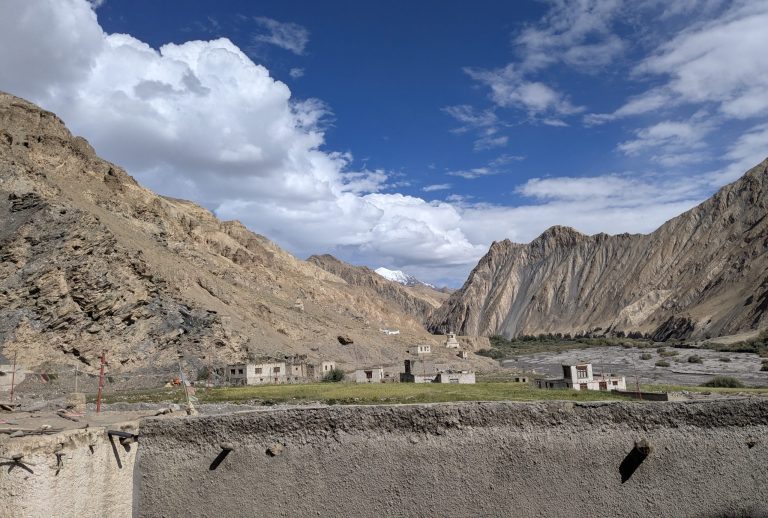
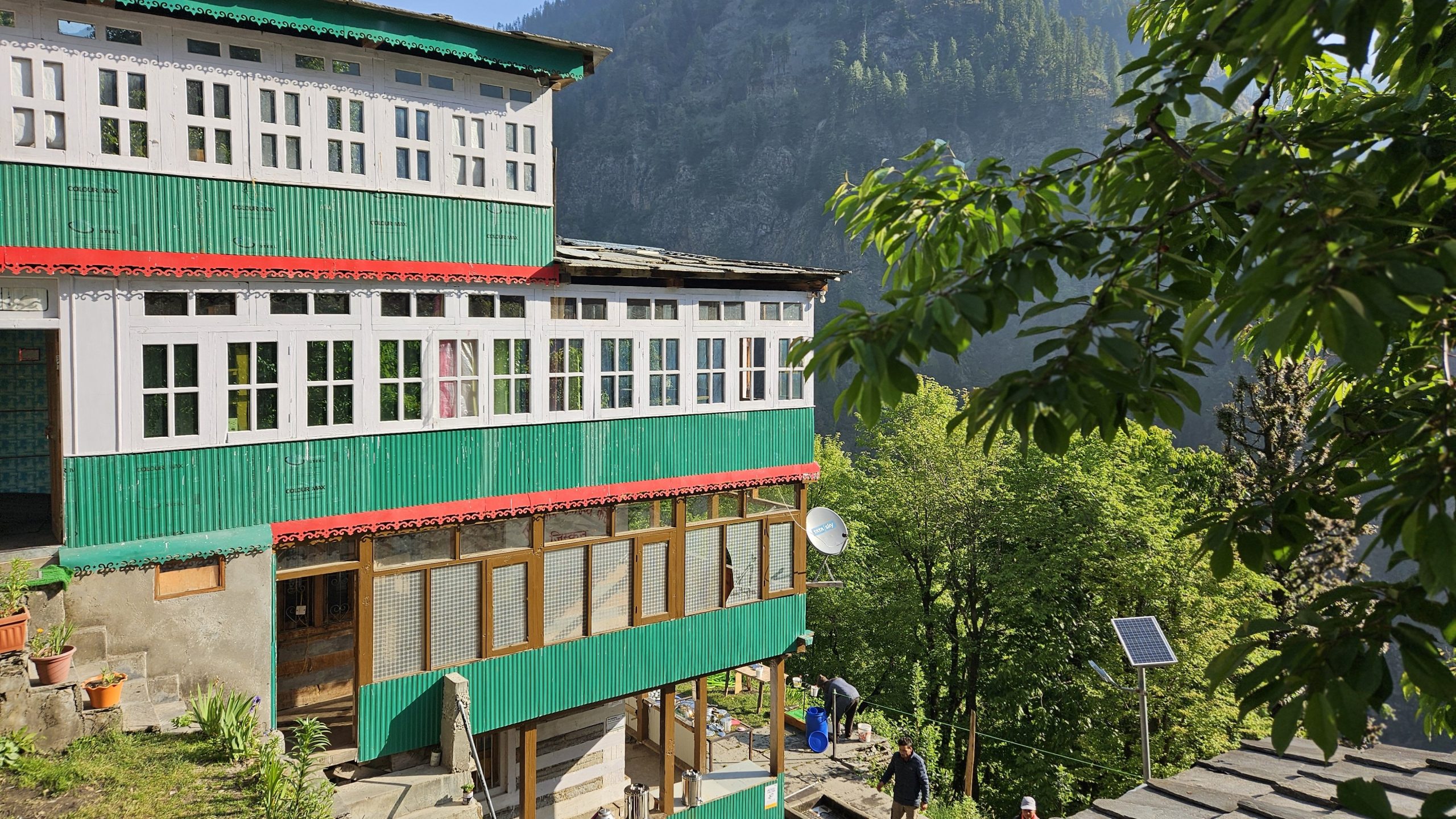
From Rohru, we assembled as a group and drove towards Jiskun. The drive itself was an introduction to the landscape we were about to enter, climbing through the mountains and into the wide-open Chainsheel Valley before dropping down toward Jiskun, the starting point of the trek at around 7,630 ft. What I remember most about Jiskun isn’t the altitude. It’s the house.
There was something beautiful about that low-ceilinged, traditional Himachali home. It didn’t feel designed for visitors. It felt like a home that had existed long before we arrived and would go on existing long after we left. That evening, the team slowly began becoming a team introductions, conversations, games, and the usual awkwardness of strangers trying to figure each other out. By the time it was time to sleep, almost everyone had occupied the room.
So a bunch of us ended up in the common room instead. It wasn’t particularly comfortable. But it didn’t matter. We were still strangers, and somehow we were already sleeping together in a room in a tiny mountain village, knowing that for the next few days, these would be the people we’d eat with, walk with, complain with, laugh with, and depend on.
The first steps
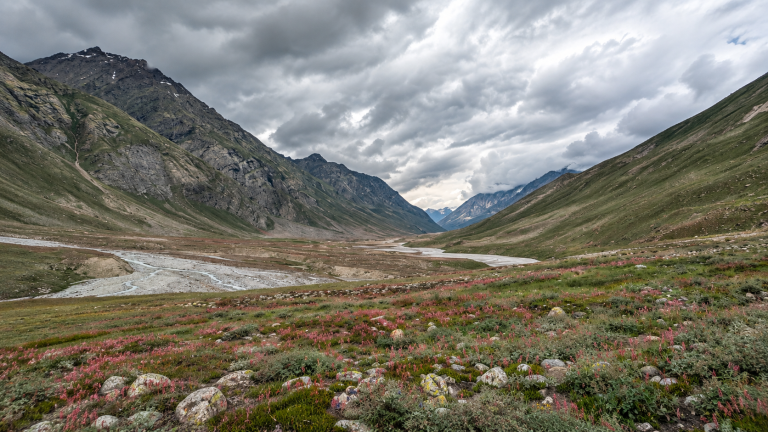
The route from Jiskun to Jakha took us through traditional mountain villages and forests. Jakha itself felt like one of those places where life had developed independently of everything happening below the mountains. From there, the trail entered dense fir forest before slowly opening toward the Rupin valley.
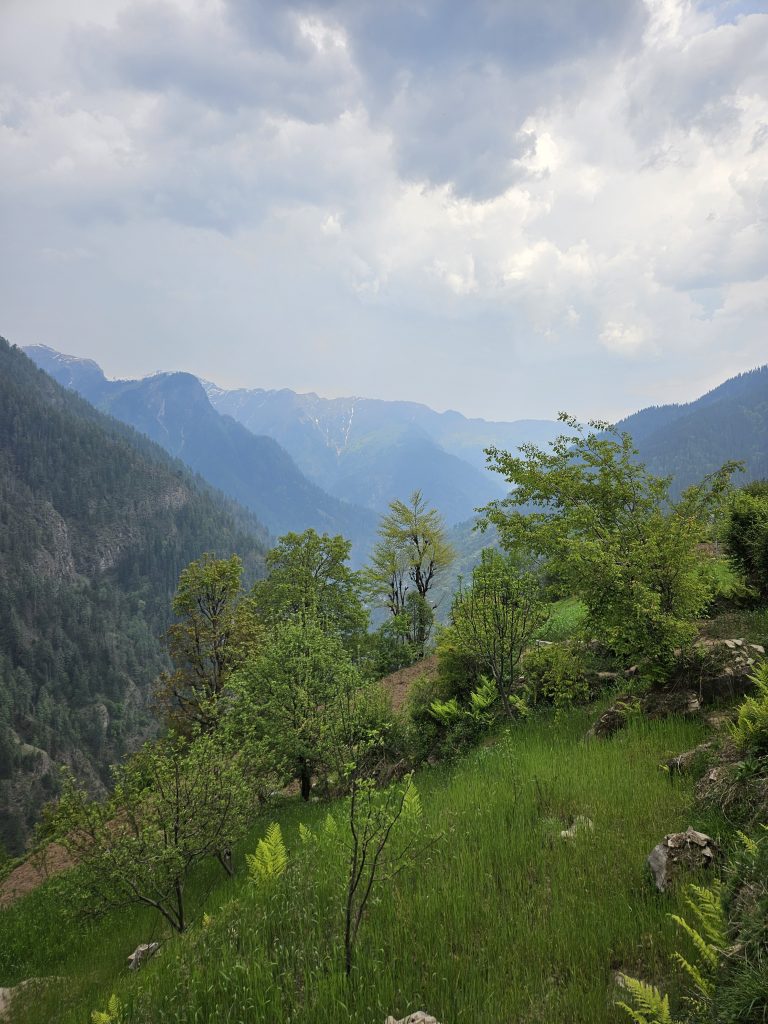
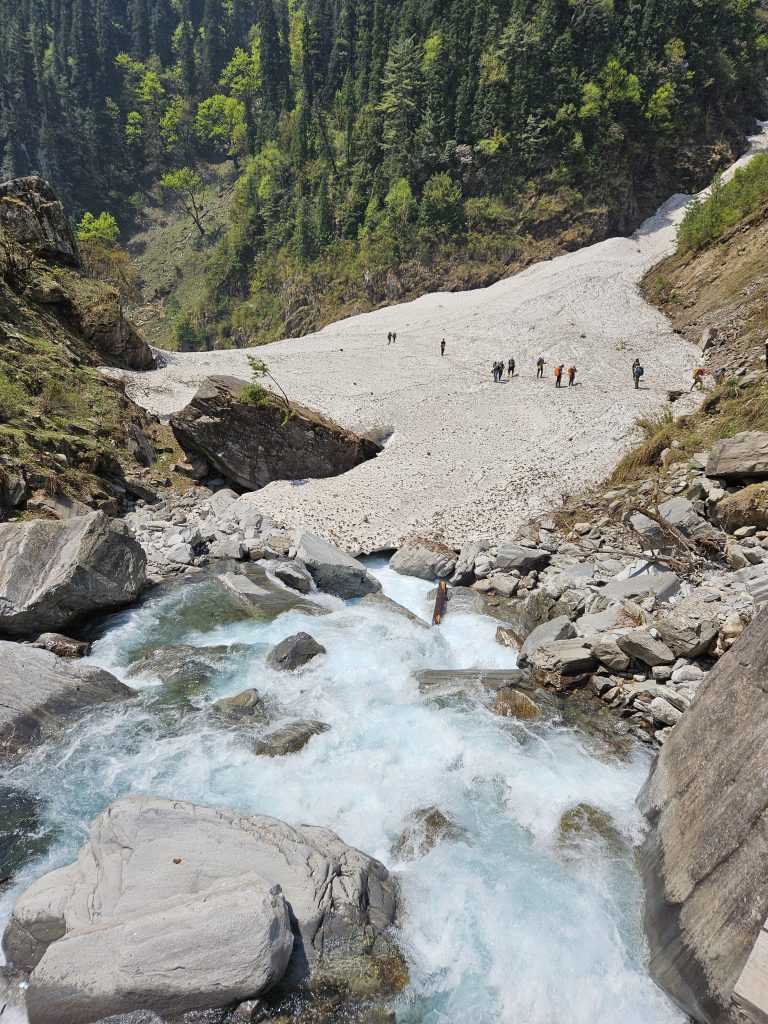
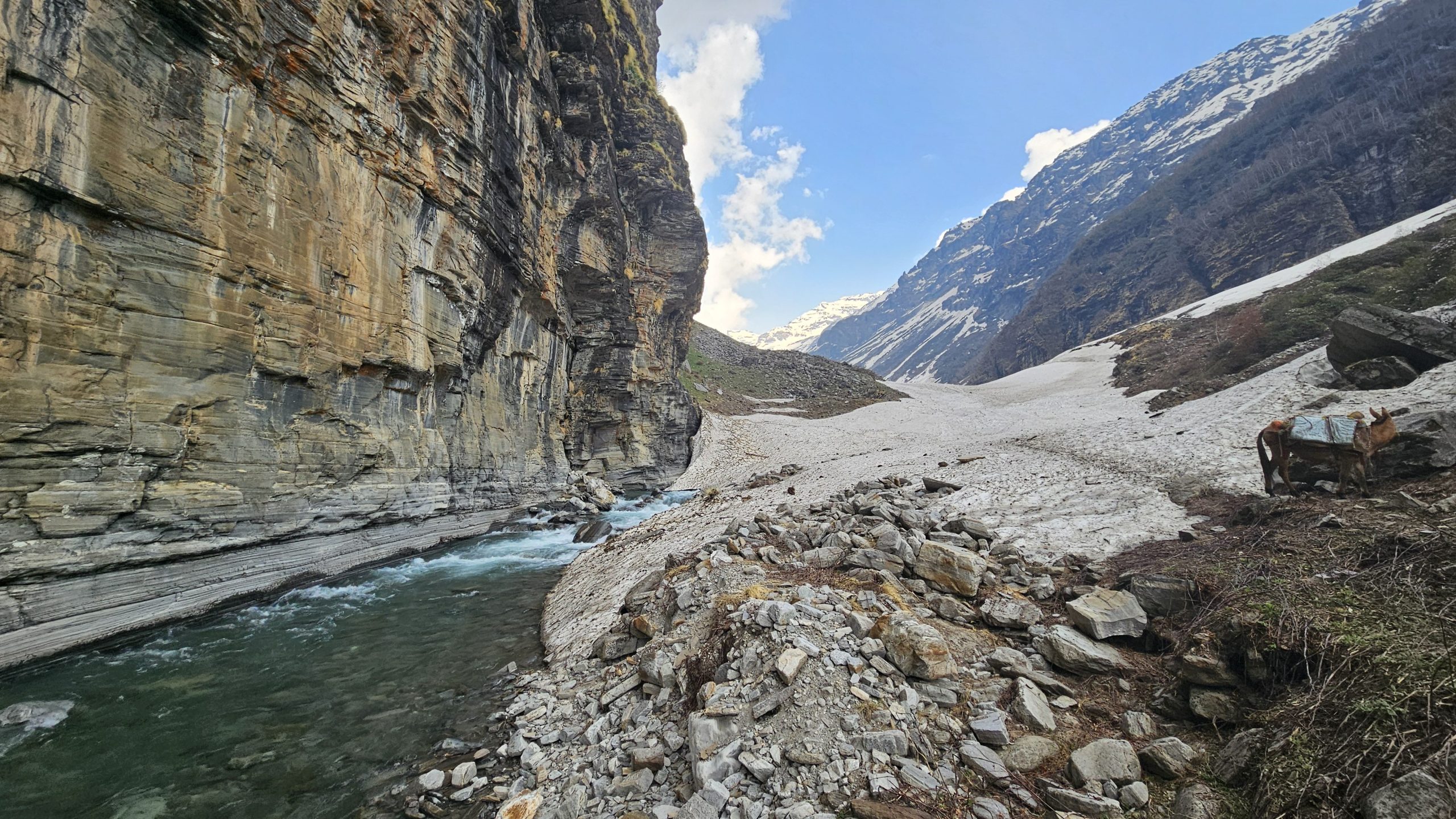
The next few days unfolded almost exactly as the itinerary promised: Jiskun to Jakha to Saruwas Thatch to Dhanderas Thatch. And slowly, the landscape kept changing. For me, there were a lot of firsts packed into those days: my first proper snow bridge, my first time seeing Kathkuni architecture up close, my first time walking beside a river that seemed impossibly blue, and my first real understanding of what people mean when they say a Himalayan trail keeps changing character.
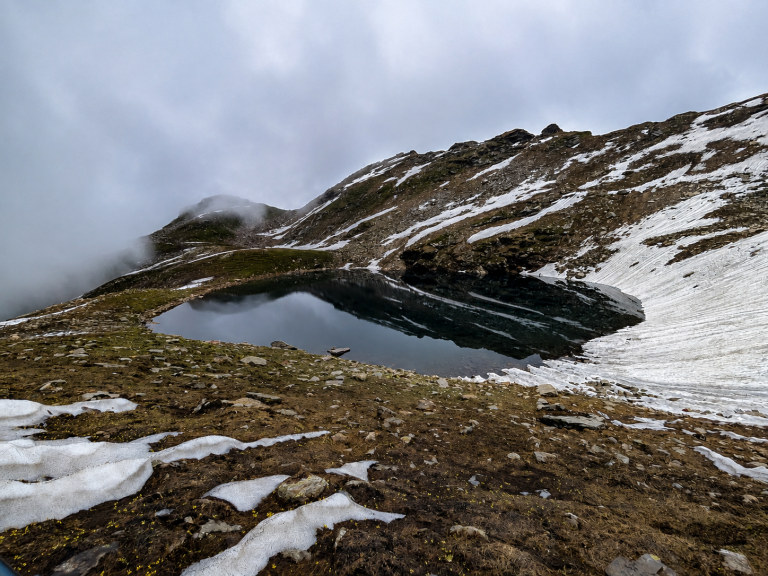
One moment you’re walking through a forest, then you’re scrambling over rocks. Then the trees disappear, then there’s snow, then a meadow opens in front of you. Then, suddenly, there’s a waterfall somewhere in the distance. The Rupin Pass trail doesn’t seem particularly inclined to let you settle into a single landscape. Every few hours, it changes its mind. And somewhere between all these changes, we started changing too. The people I had met as strangers were becoming familiar.
The valley with the waterfall
By the time we were getting closer to the Upper Waterfall campsite, the group had found its rhythm. There were people I naturally gravitated toward- Sohail, Venu, Sri, Sanjana, Ranjitha, Aman, and Ambuj, of course. These were no longer just names on a participant list. They had become the people I looked for during the day. The people I’d walk beside, sit with after reaching camp, share food with, and occasionally complain about the climb alongside. Their presence somehow made the difficult sections feel easier.
There’s a moment on this trek I like to call the “surprise” of Rupin Pass; it’s a point where the valley suddenly opens, and the famous three-stage waterfall reveals itself, all 1,500 feet of it, tumbling down as if straight out of the clouds. I’d seen photos. Nothing prepared me for the real thing. I still remember how magnificent it looked, and more than that, how happy I felt seeing it for the first time. There was a smile on my face I don’t think I could have hidden even if I’d wanted to.
Instead of continuing, I took a break. I found a boulder at some height, sat down, and just absorbed the view. For a while, I wasn’t interested in reaching the campsite, I was more interested in watching everyone else reach that point. It was fascinating to see how people reacted to the scenery. Some stopped immediately. Some took photographs. Some just stood there, looking. Everyone seemed to have their own little moment with it.
Quite some time passed. Eventually, most of the group had moved ahead, but two people were still to cross that point. So I decided to wait. About fifteen minutes later, I saw the brother-sister duo coming with the guide. They were struggling. The sister was panting heavily, finding it difficult to take even a few steps at a time. It was my first real encounter with someone struggling with altitude sickness. Until then, AMS had been something I’d heard about in briefings and read about before treks. Seeing it up close was completely different.
What stayed with me most was the brother’s reaction, the concern in the way he kept looking at his sister, trying to gauge how bad the situation was while still trying to keep her moving. I offered to help. That short break turned into a much longer one, and eventually I reached the campsite almost two hours late. By then, everyone was waiting for us, understandably worried and a little bothered, wondering why we were taking so long. But we made it. And somehow, that whole episode stayed with me. Not just because it was my first close encounter with altitude sickness, but because it was one of those moments when the mountains suddenly stop being just beautiful. They can be unforgiving too.
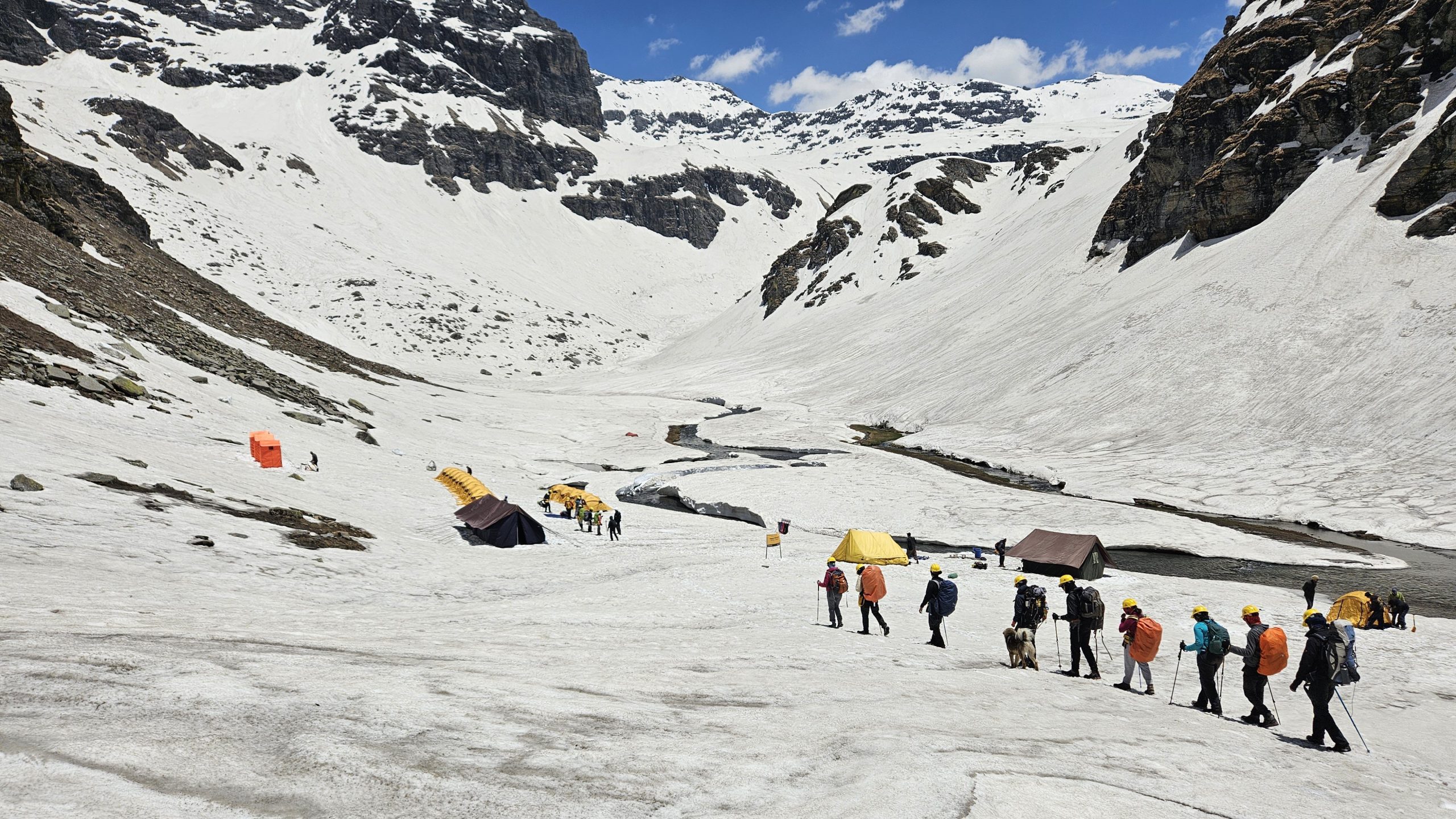
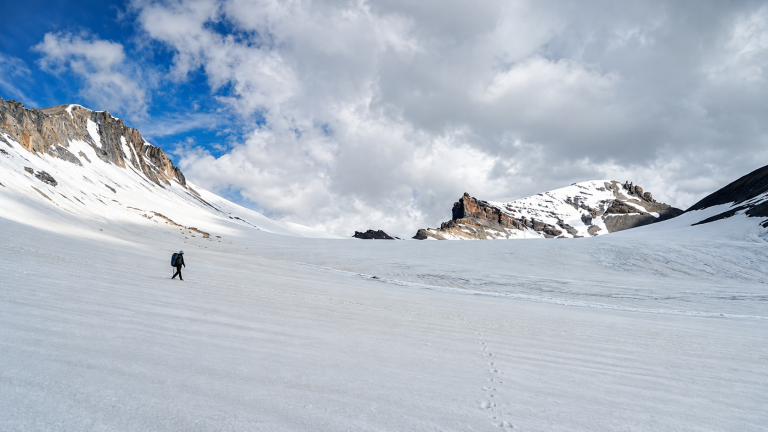
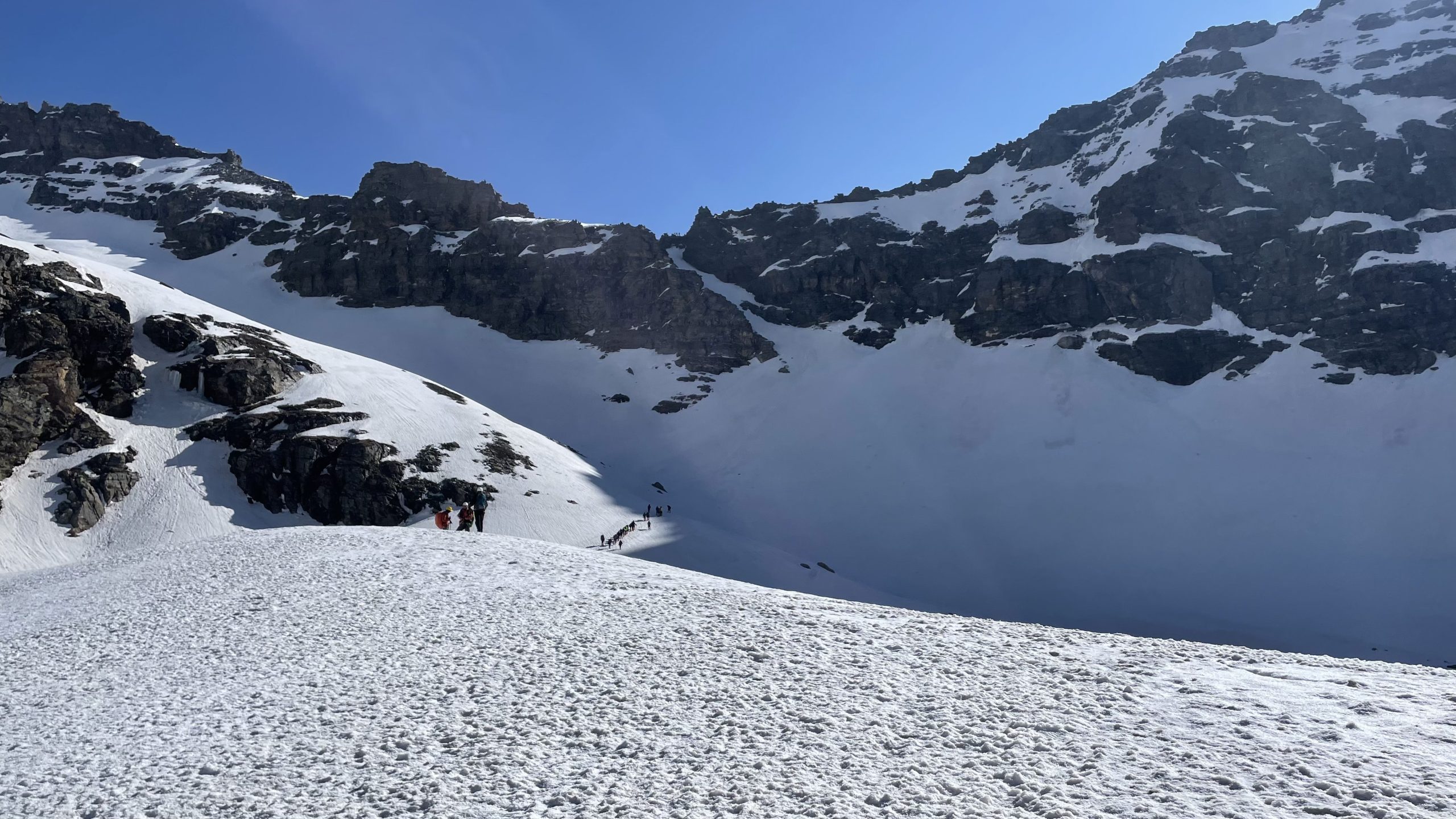
Somewhere around the campsite, it was snow everywhere. Until then, snow had mostly been something I’d seen from a distance. Now I was actually walking on it, my first proper snow traverse. There was a strange mix of excitement and caution in those first few steps. You know the snow is holding you, but you also know it doesn’t have to. Every step suddenly becomes something you think about — where do I put my foot, how hard do I press, what happens if it slips? And then, after a while, you stop thinking about it and just walk.
I have to mention Santosh ji, 60-something, and somehow with more energy than the rest of our group combined. The kind of person who makes you quietly recalibrate what’s actually possible with age and stubbornness. He’d done more treks than all of us put together, and he never let anyone forget it in the best possible way, leading by example, one steady step at a time.
The pass-crossing day
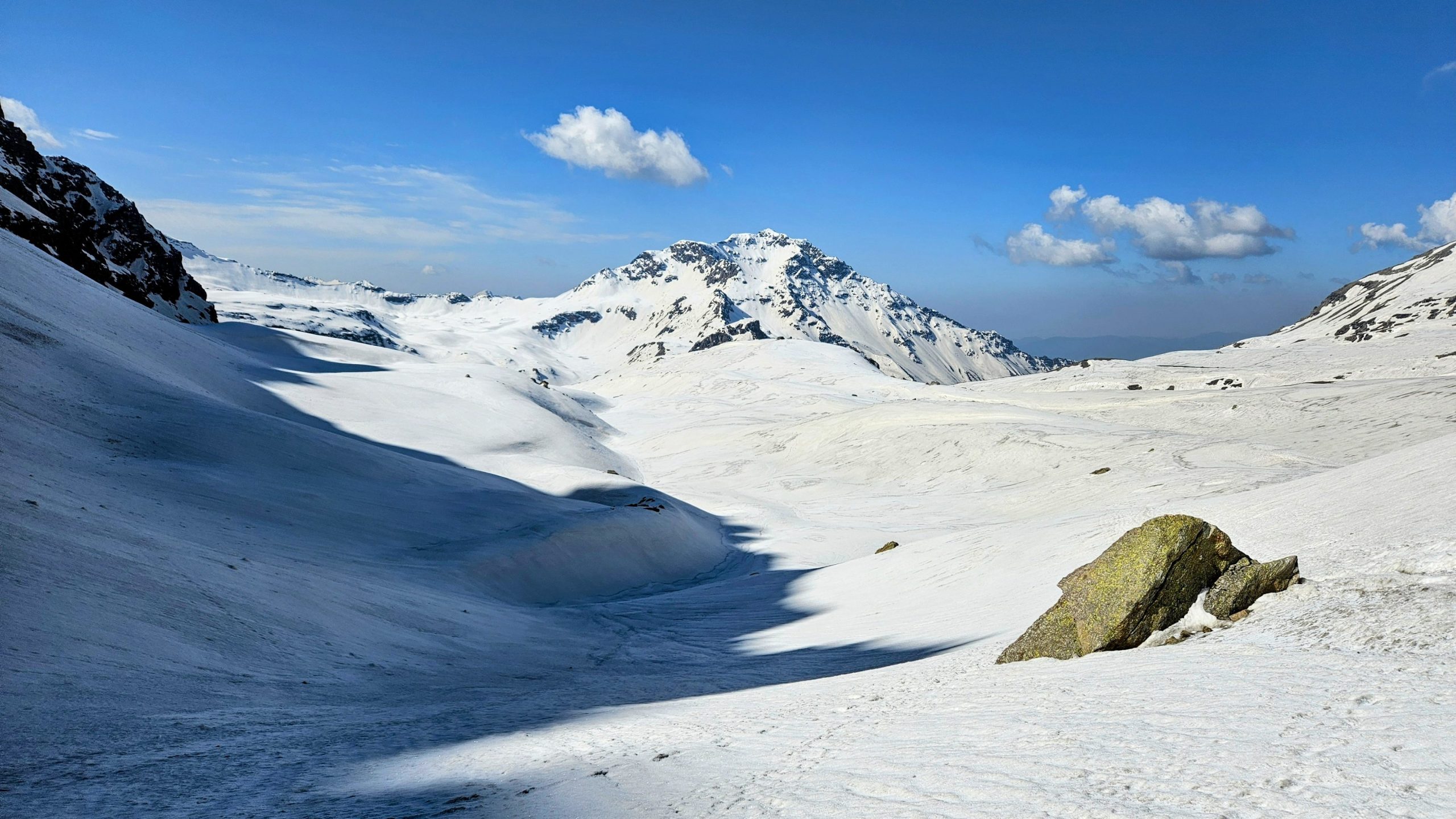
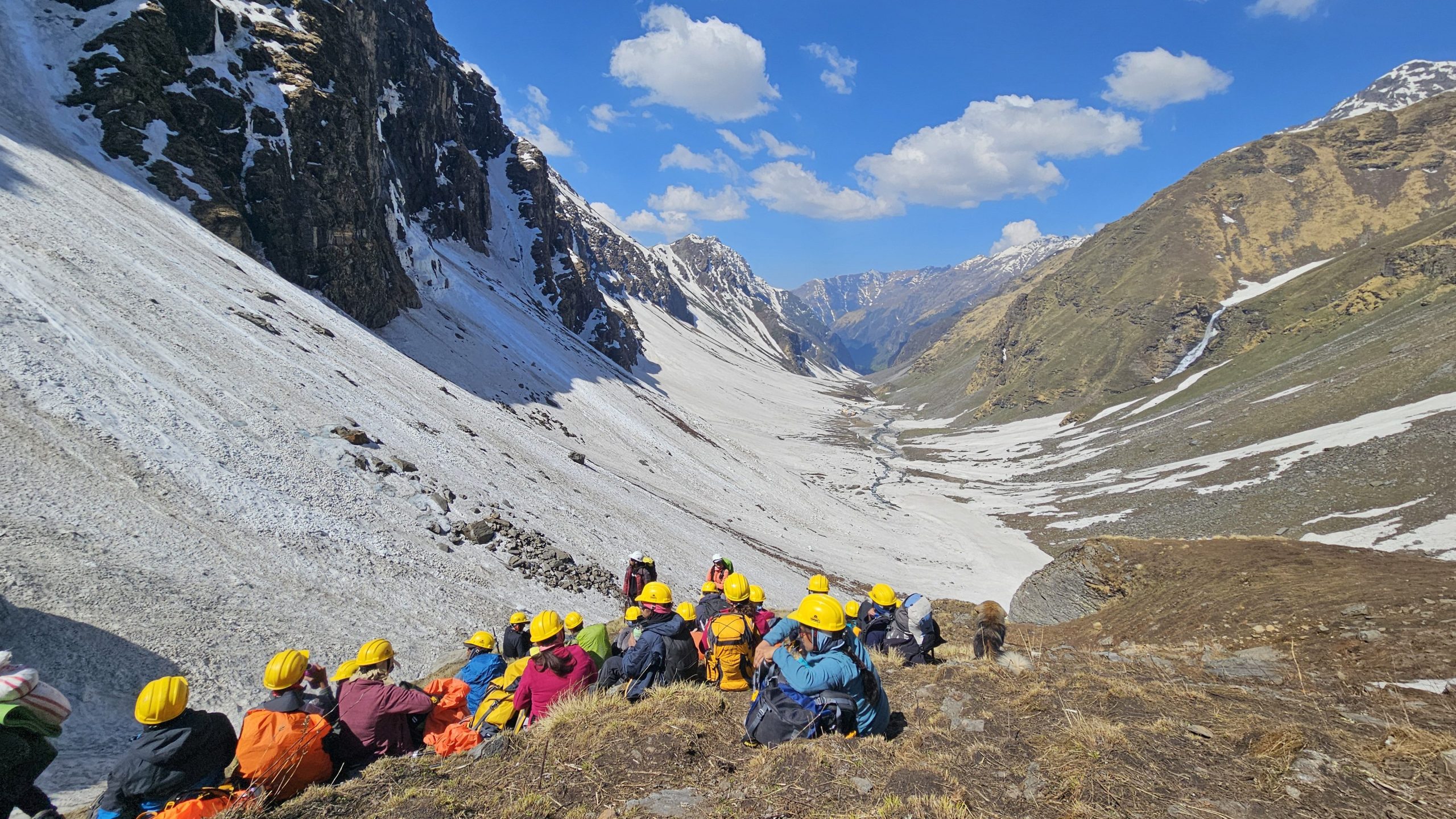
The pass-crossing day started early, very early. The kind of early where calling it “morning” feels like an exaggeration. From Upper Waterfall, the route climbs toward Rata Pheri and then into the Rupin Gully. The final climb to the pass is one of the defining sections of the trek, followed by a long descent toward Ronti Gad.
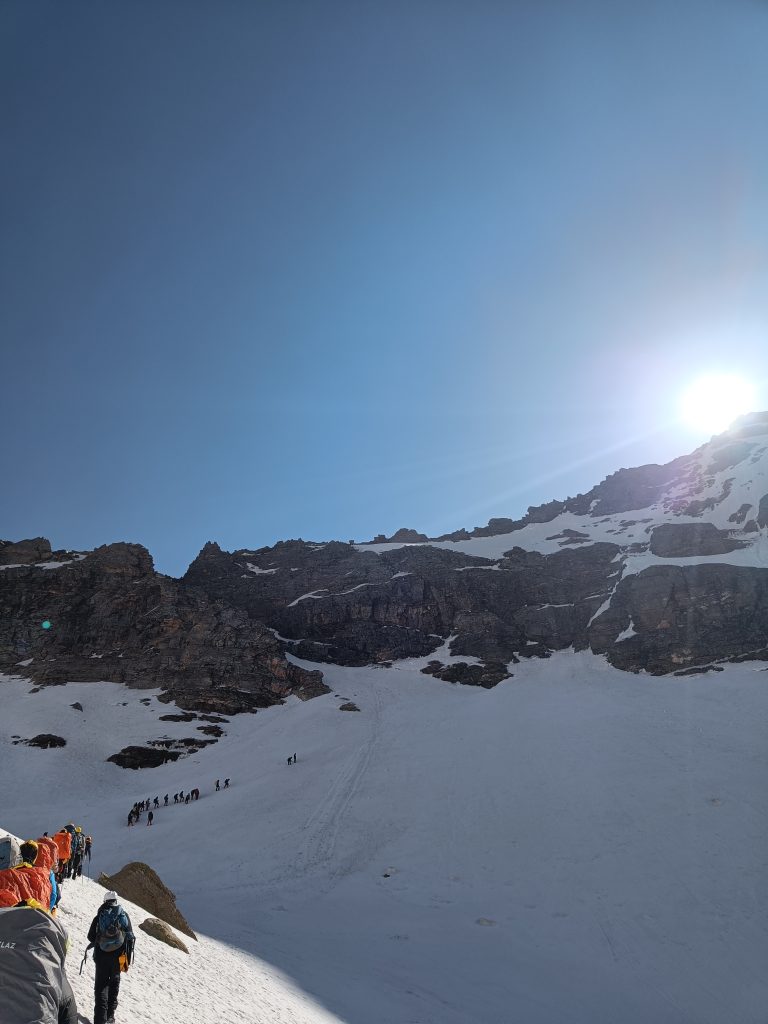
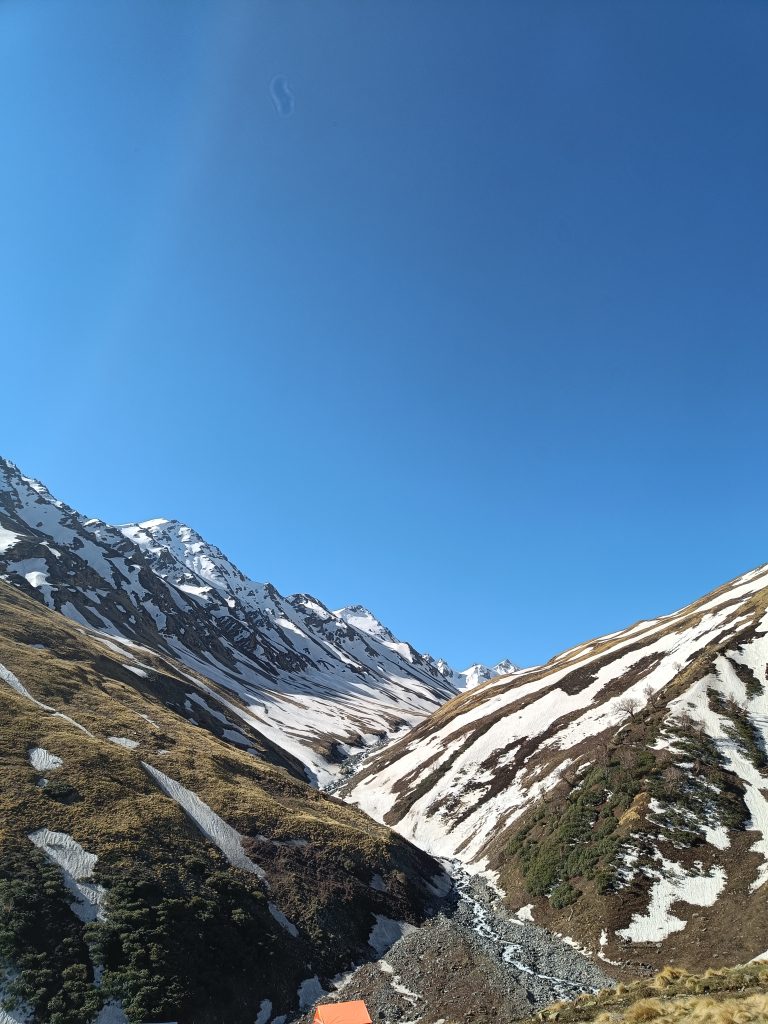
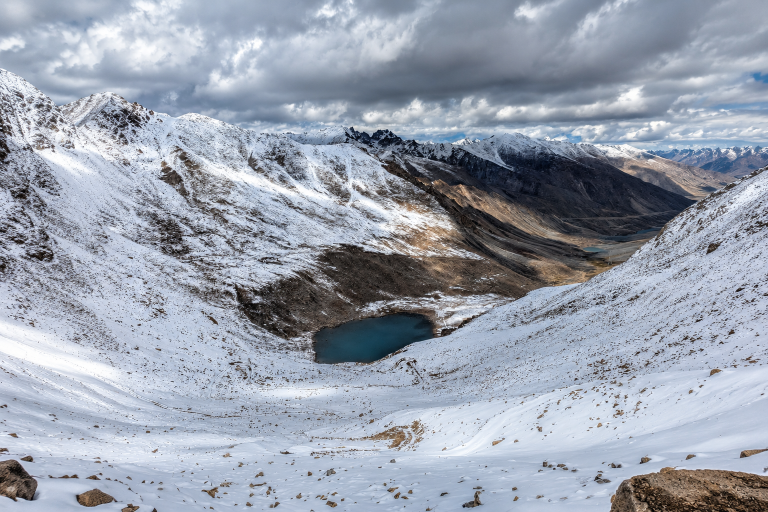
The climb was hard. But there was something satisfying about it, maybe because I knew exactly what I was climbing toward, maybe because this was the section I’d been waiting for since I left home, or maybe because the group around me had become familiar enough that nobody really needed to say much anymore. We just kept moving, step after step. And eventually, we crossed Rupin Pass. 15,000-plus feet above sea level. On one side was everything we’d spent the previous days climbing through. On the other was Kinnaur. And suddenly, it was descent, descent and more descent.
Looking back, nature was kind to us that whole week, even when it didn’t feel like it in the moment. Over those seven days we saw every mood the mountains had to offer: bright sun that had us stripping down layers within minutes, sudden rain that sent us scrambling for our rain covers, hail that stung on the way down, and snow that can give chills to the bone. Not once did the weather turn genuinely dangerous, not once did the trail become unsafe to walk. The mountains don’t always show that kind of mercy. In our case it did, and I don’t think any of us fully realised it until much later.
Sangla Kanda
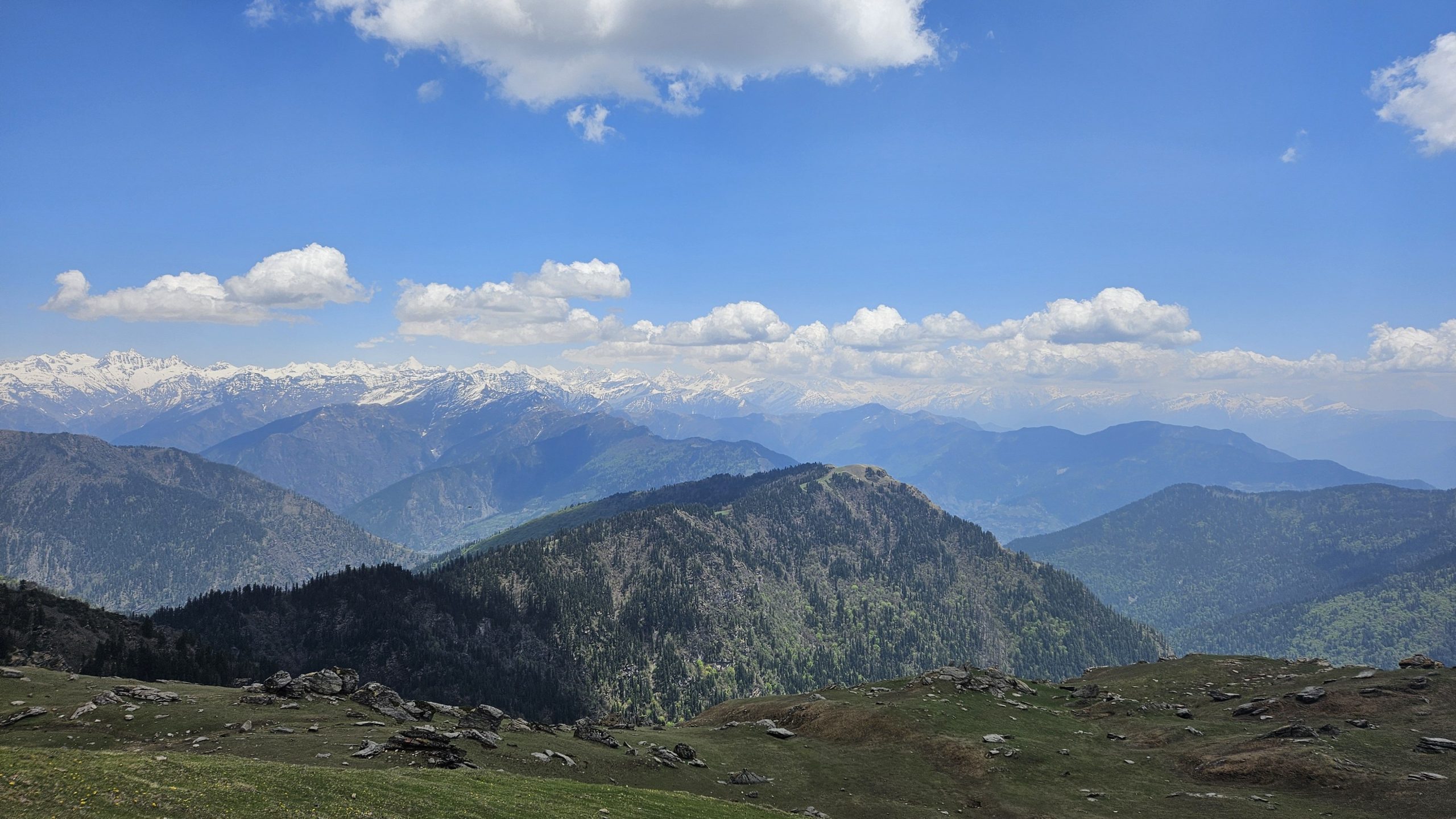
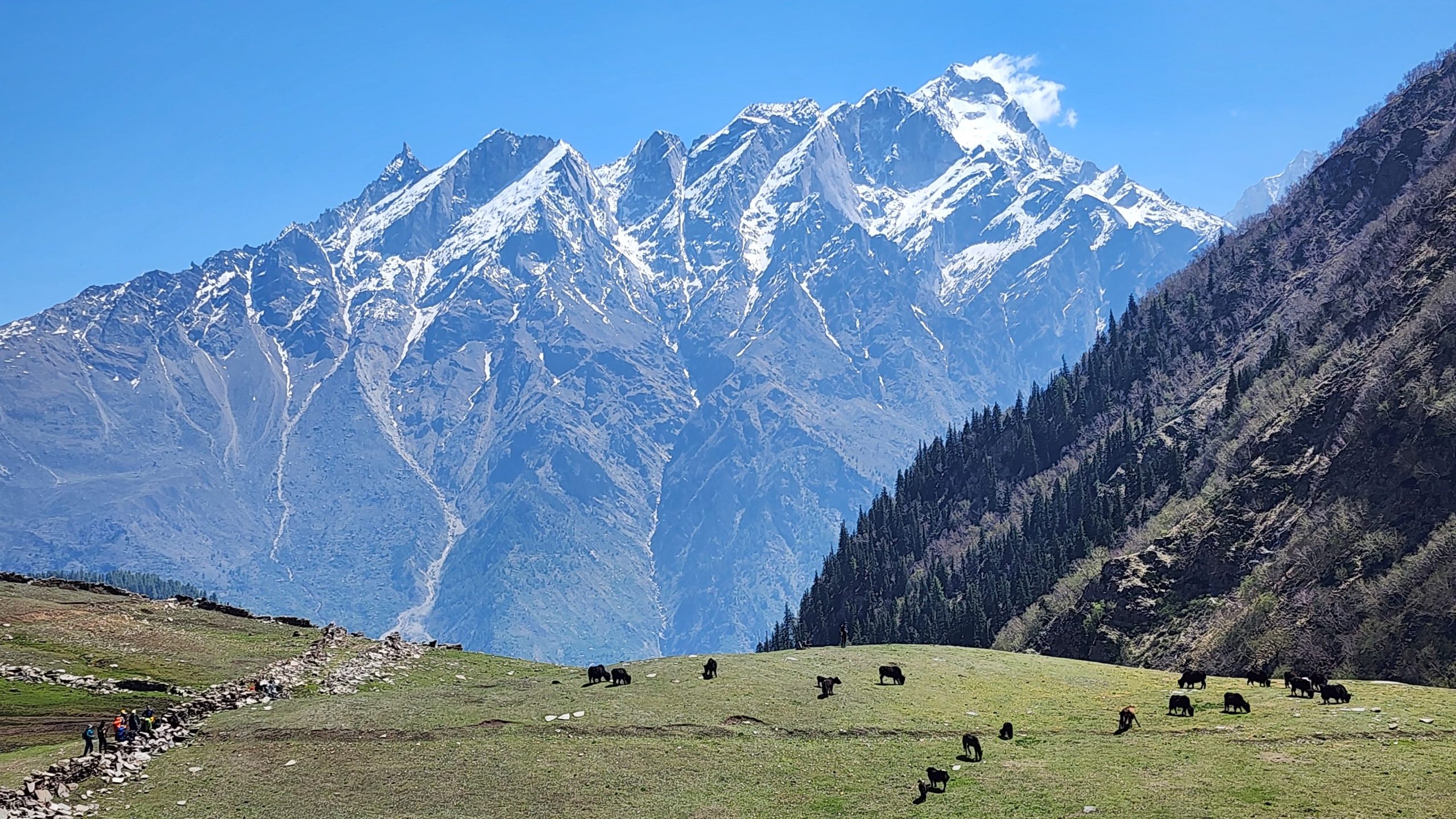
The landscape changed again. The hard, rocky world around the pass slowly gave way to the soft meadows of Sangla Kanda. After days of snow, rock, forests and river valleys, the open grasslands felt almost unreal, the jagged, snow-capped Kinnaur Kailash range suddenly filling the horizon, impossible to look away from.
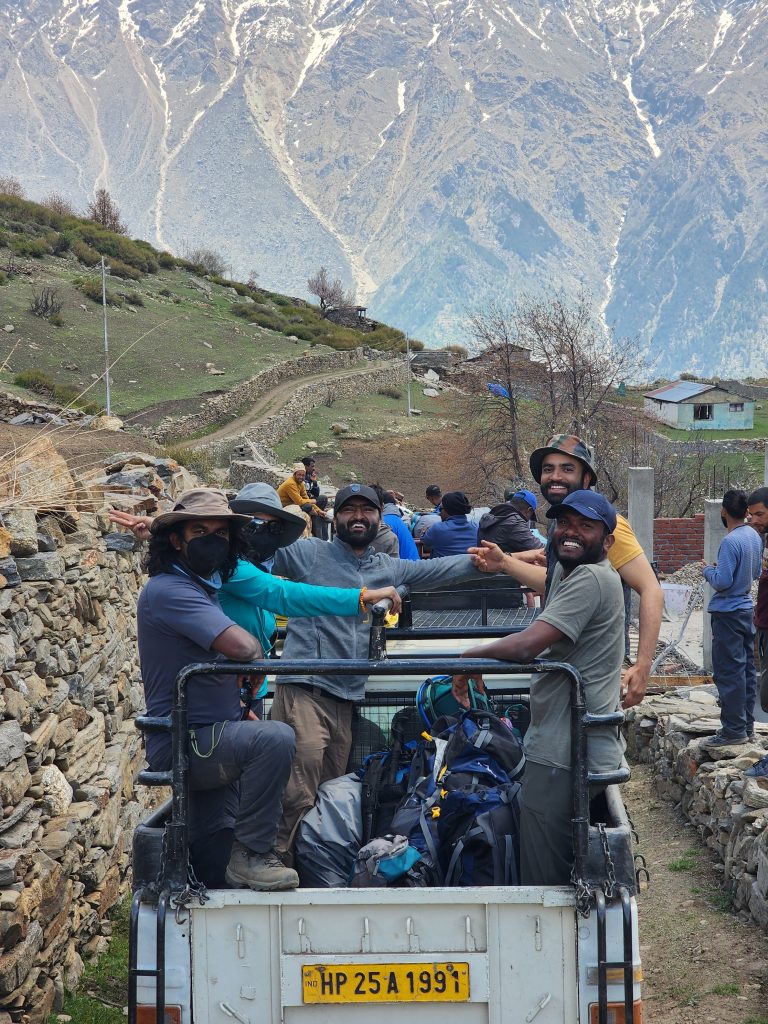
And then came the ride from Sangla Kanda to Sangla. We stood in the back of a pickup truck, holding on for dear life, trying to keep our asses inside the vehicle as it bounced and rattled its way down. Every big bump had us momentarily airborne. The ride was so rough that our primary objective wasn’t even to enjoy the view it was to make sure we didn’t get thrown out. That ride remains one of my favourite memories from the entire trek. Looking back, that chaotic descent was the perfect transition out of the trek. The walking was over, the pass was behind us, and the week we’d spent together was slowly coming to an end.
The goodbye
I was staying back in Sangla, which meant I was the one who had to watch everyone else leave. I’m not good at goodbyes. I usually prefer them quick. A hug, a “take care,” maybe a “see you soon,” and then leaving before it gets uncomfortable. But this one was different.
These people had gone from being strangers to being the people I’d shared cold mornings, long climbs, meals, exhaustion, jokes, and silence with. For a week, our lives had become strangely simple. Wake up, walk, eat, talk, walk some more, reach camp, sleep, repeat. And then, suddenly, we were back in civilisation. There was no reason for everyone to stay together anymore. Everyone had different lives and routines.
I remember watching everyone leave from Sangla. That was probably the saddest goodbye I’ve had on a trek, not because something bad had happened, but quite the opposite. It was sad because something had been really, really good.
Rupin Pass was my first proper snow trek. My first time seeing some of those Himalayan landscapes I’d previously only seen in photographs. But when I look back now, the snow isn’t the first thing I remember. It’s the people. Maybe that’s what a good trek actually leaves you with: not just photographs of mountains, but a group of people who were strangers when you arrived and somehow became part of the story before you left.