Miyar Valley: I Went Alone, But I Wasn’t Really Alone
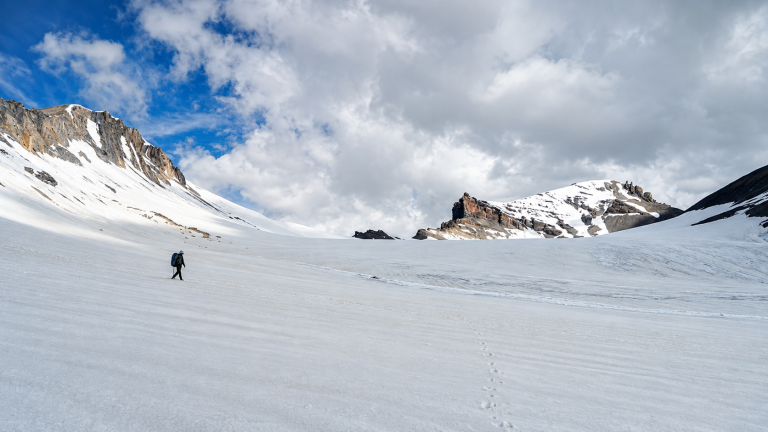
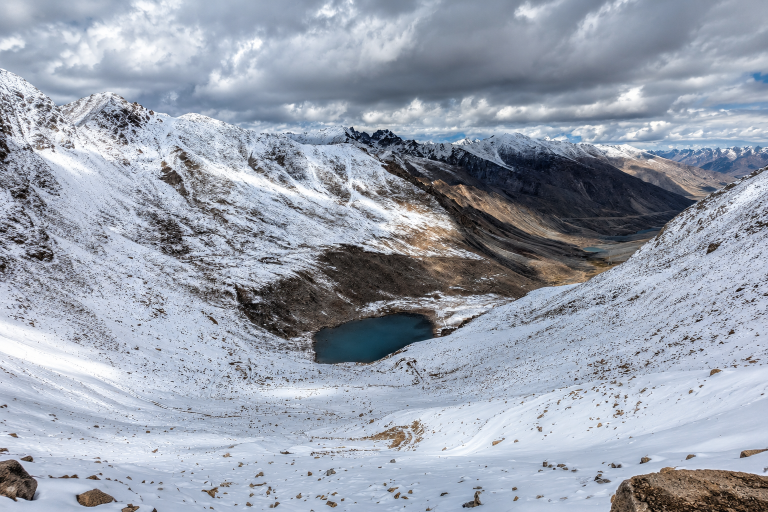
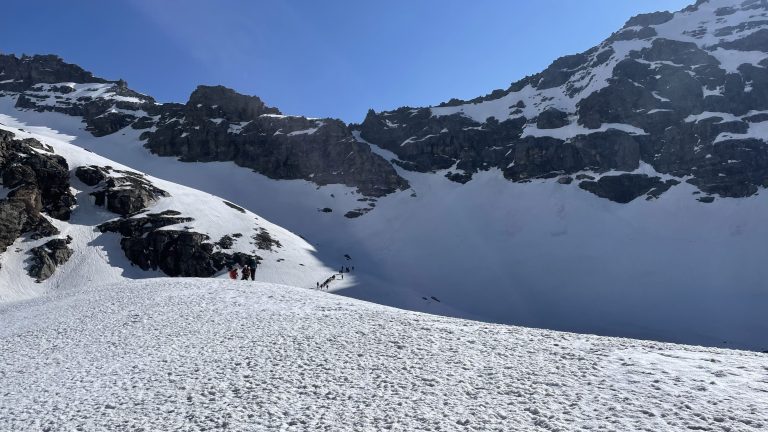
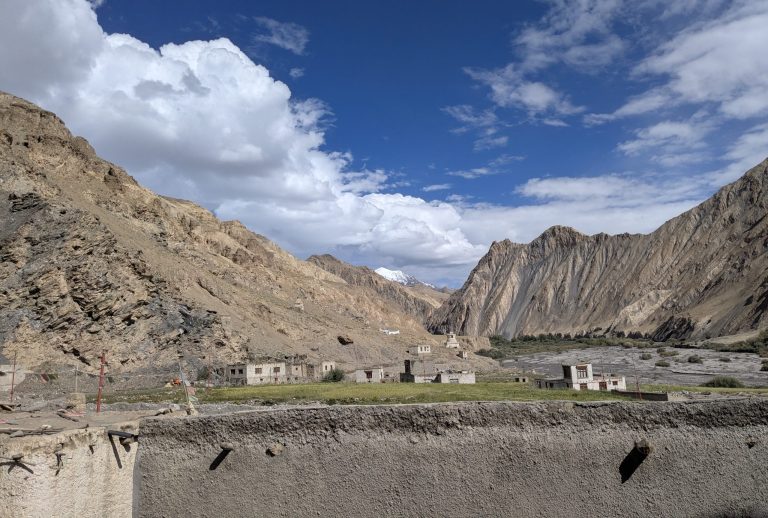
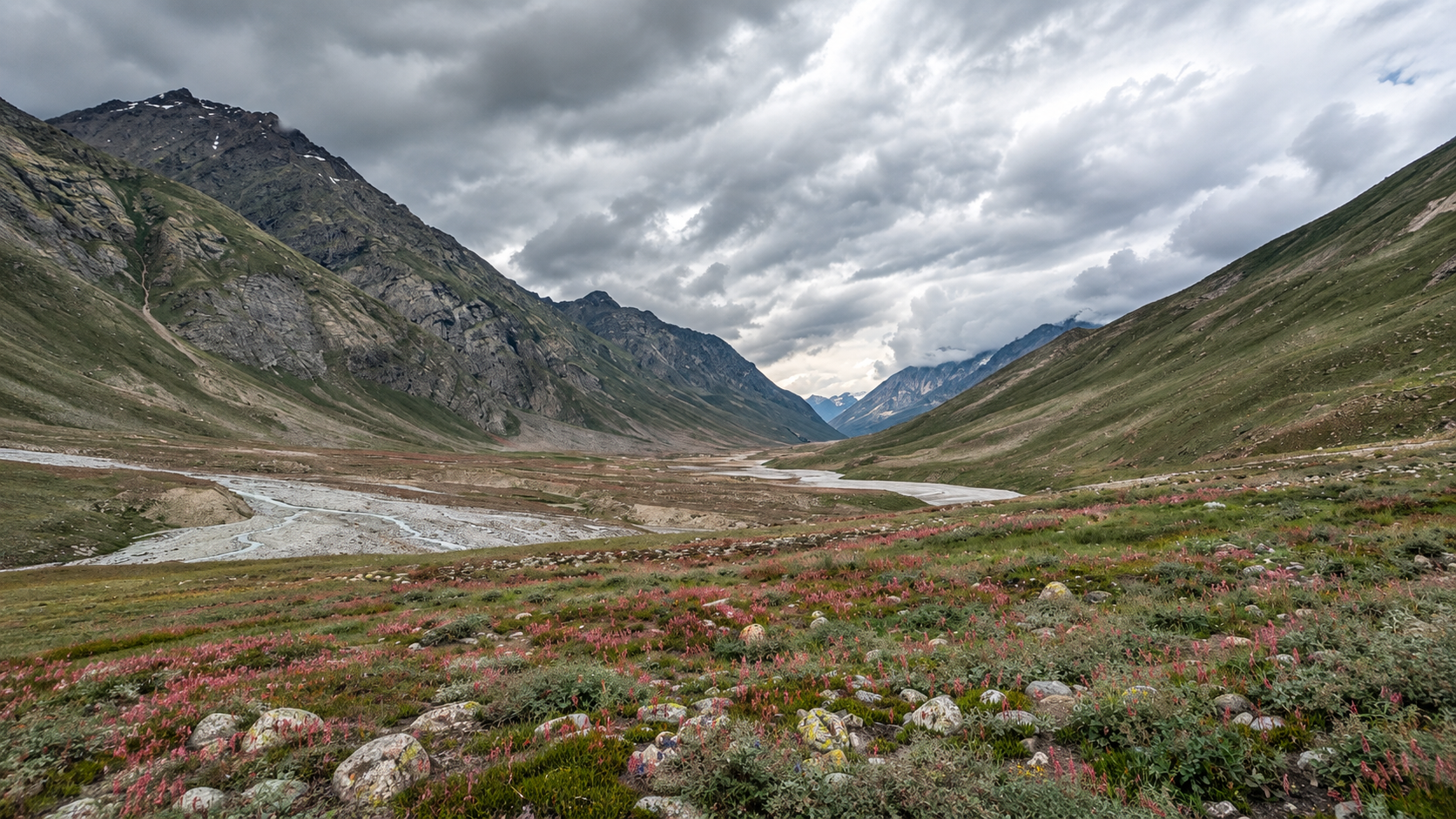
Miyar Valley is a remote valley in Lahaul, Himachal Pradesh, following the Miyar River deep into the mountains. The lower valley lies around 2,700 to 3,000 metres, while the trek from Shukto begins at around 3,500 metres and ~64km of total distance. As the valley opens up, villages and farms gradually give way to wide grasslands, wildflowers, rocky terrain and glaciers. Further ahead lies the Miyar Glacier and the route towards Kang La, a high pass at around 5,470 metres connecting Miyar with Zanskar.
I started from Manali on 27 July 2026, thinking I would reach Shukto the same day.
I took the Keylong bus at 10:30 AM till Tandi. After waiting for around 1.5 hours at Tandi, I got the Udaipur bus at around 2 PM. Once I got on the bus, I was relaxed until I came to know that a bridge before Jahalma had been washed away. We had to get down, cross that section on foot and then take another bus from the other side. But to add to the hassle, there was no bus waiting for us. We kept hearing, “It will come now,” until around 6:30 PM when it finally arrived. Then it waited for passengers from another Keylong bus which was delayed because of traffic. We finally left around 8 PM and I reached Udaipur at 9 PM.
Thankfully, after realising that I might reach late and wouldn’t get any transport towards Miyar, I had already spoken to Pangi Homestay in Udaipur and planned a backup for the night. That turned out to be a good decision. The homestay owner was kind and a good host. He also said he would check if he could find some vehicle going towards Miyar the next day. Otherwise, there was a bus at 4 PM.
The next day, I came to know that another nala had washed away the road and vehicles wouldn’t go beyond that point. Even the bus dropped passengers there. Knowing this, I took my backpack and went towards the road junction from where vehicles going towards Miyar usually passed. After waiting for a while, luckily I got a lift. There were National Geographic students and researchers along with a local guy, Bhandari ji. I didn’t initially think they would give me a lift as there were already four or five people, but they were kind enough to take me along.
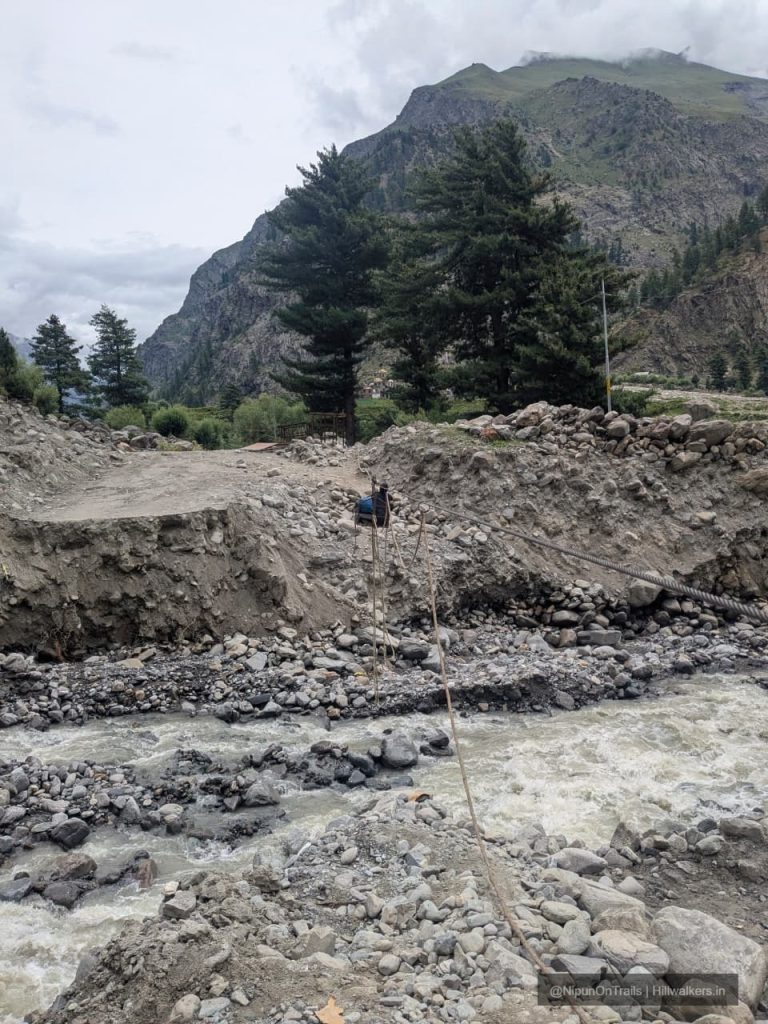
At Karpat Nala, we had to cross using a trolley, and Bhandari ji had another vehicle parked on the other side. I was honestly amazed at how people manage things in such remote places. We continued towards Khanjar, where Bhandari ji told me that I might need permission for trekking. Things had become stricter recently because of some incidents. At Tingrut, at the Himachal Police check post, I explained that I couldn’t get the permission from Udaipur because I wasn’t aware of the requirement. I told them I would be staying at Shukto and would try to get the permission with the help of the locals before continuing further. After noting down all the names, we moved ahead and Bhandari ji dropped me at Tashi Homestay in Shukto.
Aunty wasn’t there as she had gone on a trek with a group, but her family, Lamu di and Suraj bhaiya, were very helpful. They spoke to the concerned authority and helped me get the permission. I spent the rest of the day resting and planning for the next few days, hoping for better weather, as I had already lost two good days from my weather window.
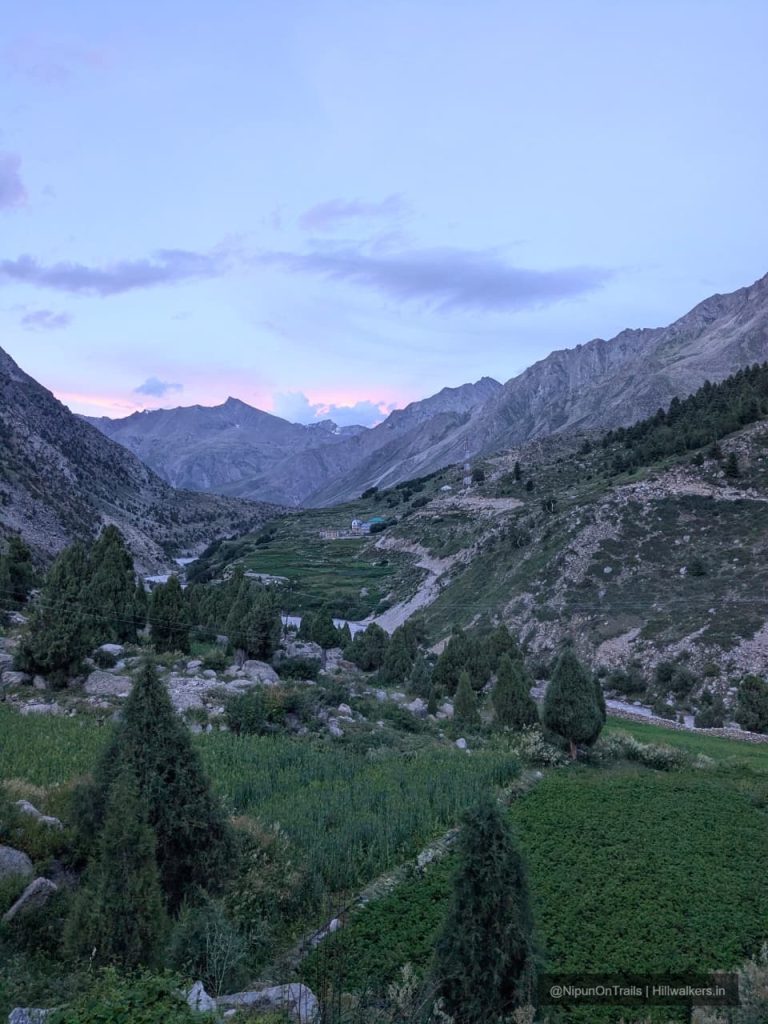
That evening, while having dinner, Suraj bhaiya said he would be going to Khanjar early the next morning. He said that if I was ready, he could drop me till Khanjar, which would save me some road walking. So, at 5:45 AM the next morning, we left. He dropped me at Khanjar and showed me the trail going into the valley. I put on my shoes, took out my umbrella as it had started drizzling, and by 6:30 AM I started walking.
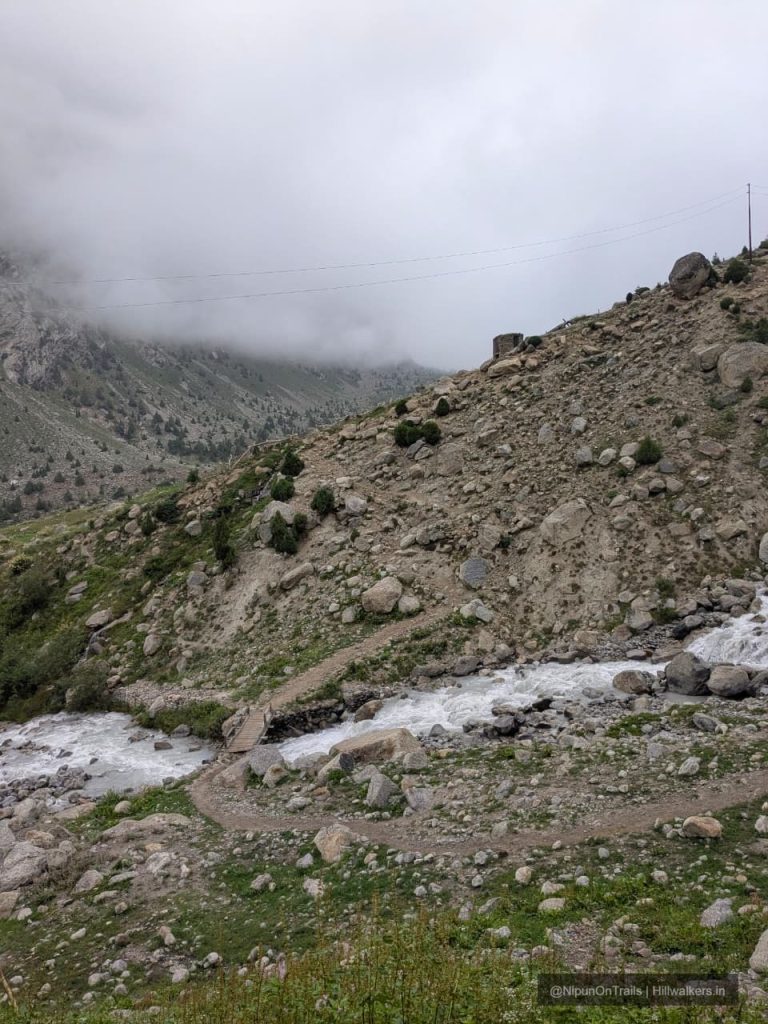
The drizzle continued for around half an hour and thankfully stopped, although it remained cloudy. The initial trail climbed for a while, followed by a small descent towards a river crossing. From there, it continued with small ascents and descents. For quite some time, it was a straightforward walk, with the Stupa visible ahead for most of the way. The climb to the Stupa was the steepest section till then, and I could feel it. After the Stupa, the trail continued alongside the Miyar River. Around 10 to 15 minutes later, I saw some shepherds and went over to speak with them. That turned into around 30 minutes of rest and conversation. One of the shepherd uncles told me that Pinky Aunty from Tashi Homestay and the group she was with were camping about half an hour ahead.
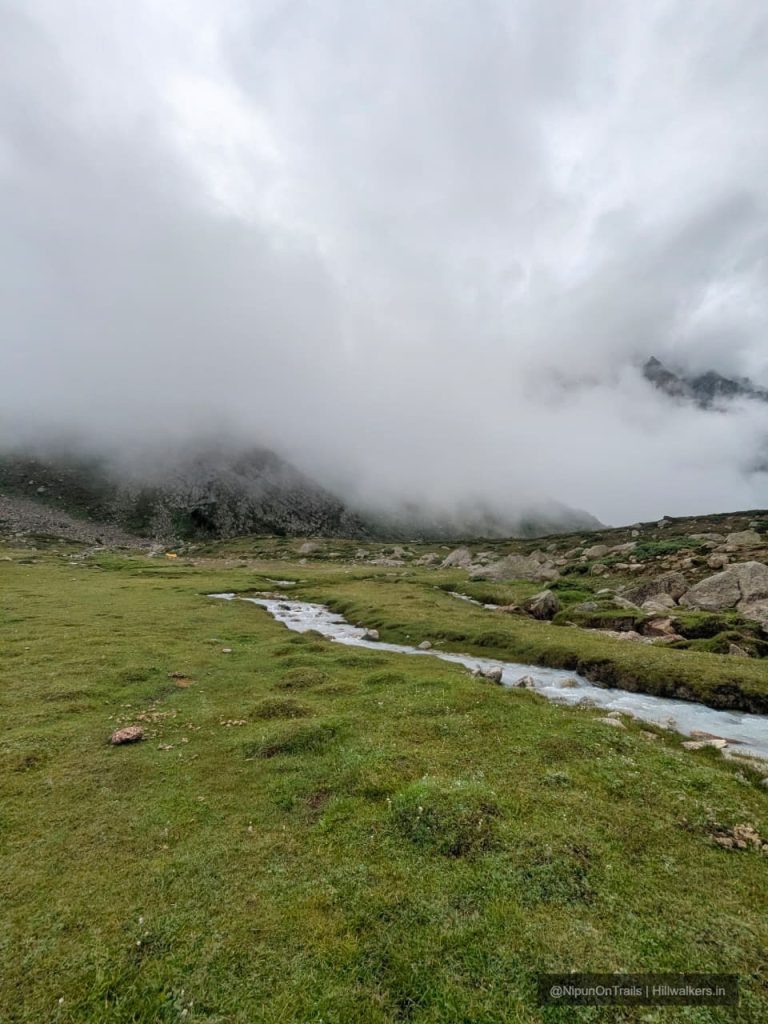
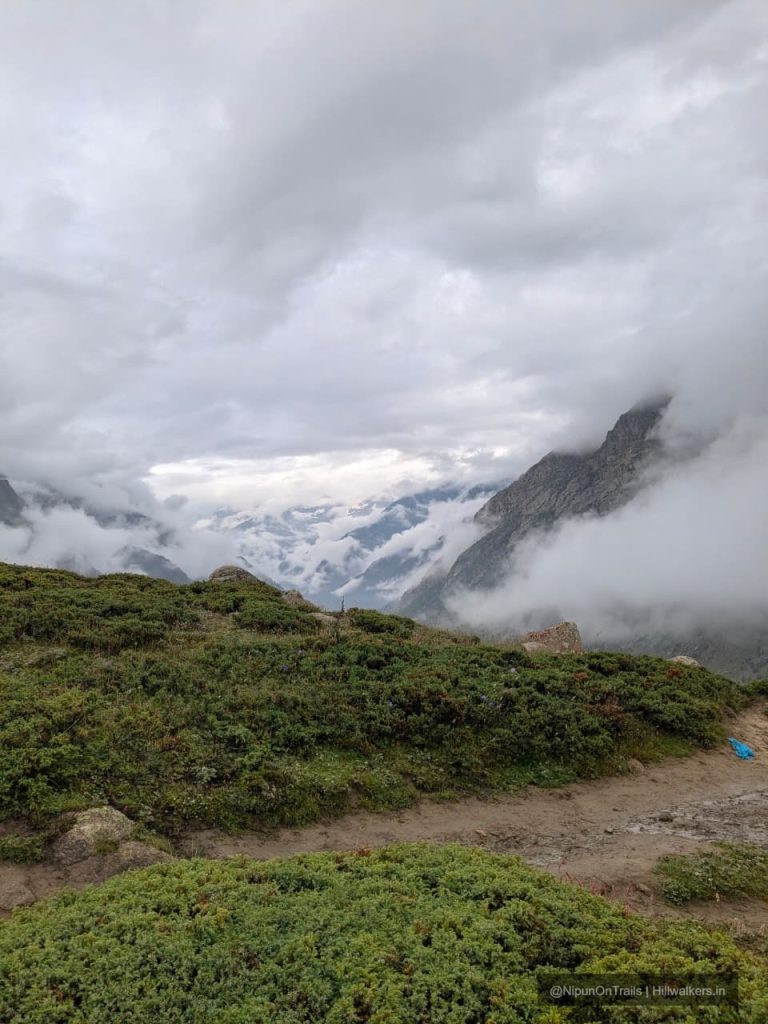
I thought, “Let’s see. If I meet them, good. Otherwise, I can meet them somewhere ahead.”
After some time, I reached the campsite. The staff were packing up and were about to leave, while the main group had already left about an hour earlier. I decided to cook my breakfast there as there was a water source and a big rock that gave some protection from the wind. I cooked my meal, ate while talking to the group staff and then they left. By the time I finished eating and packed everything, I had already taken a few good and long breaks. My plan was to reach Zardong (~20km from Shukto) or somewhere further.
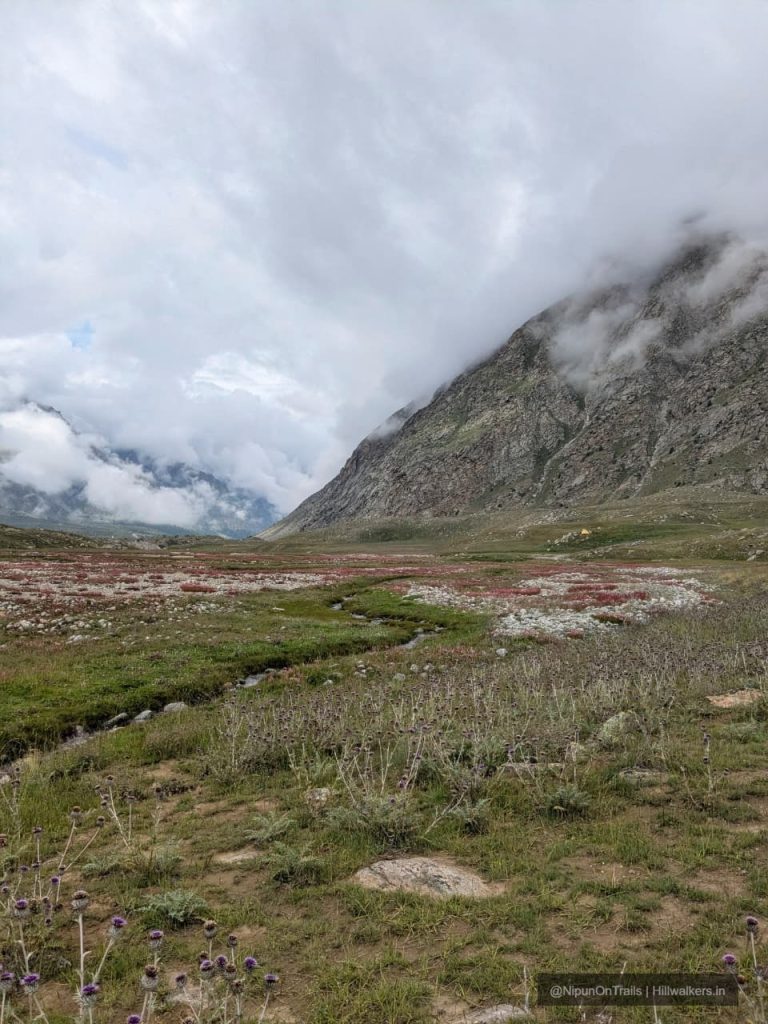
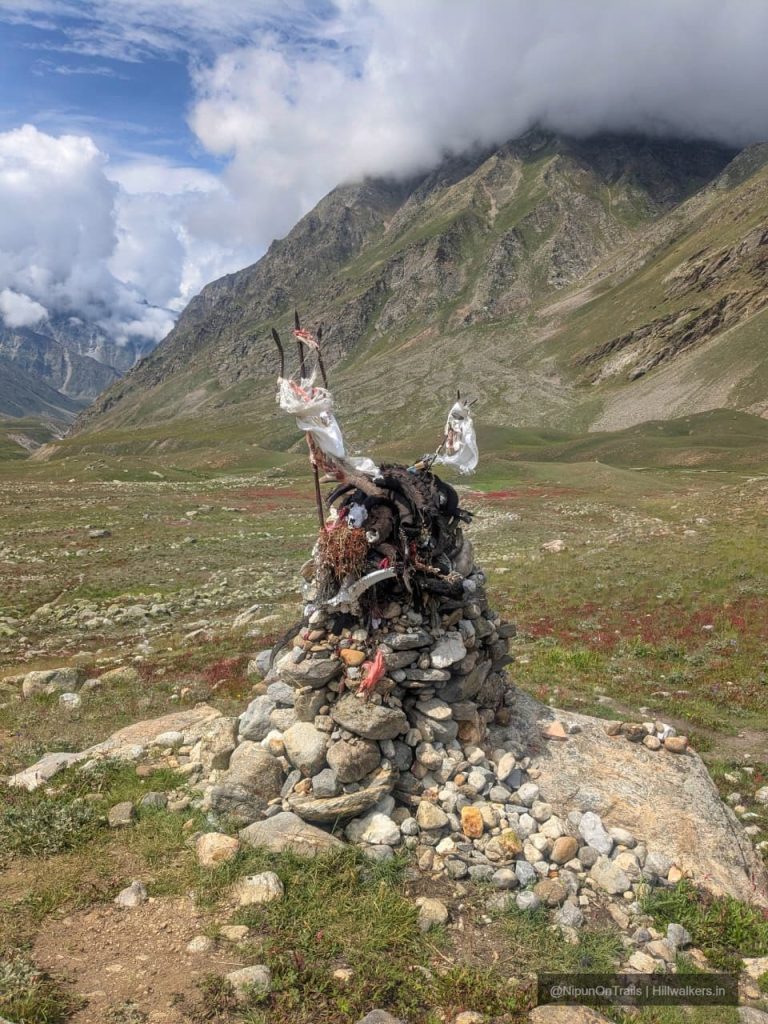
After walking for around 15 to 20 minutes, I saw some rocks placed on the trail. It felt like some indication to stop going ahead, but I couldn’t see any other trail. The route was also marked on the map I was referring to, so I continued. Around 15 minutes later, I reached a nala. I couldn’t see any proper crossing. I tried a few trails leading towards it and looked around to see if there was a safer way across, but couldn’t find one. So I finally decided to try crossing it. I crossed a small section, but ahead was a comparatively larger stream with a strong current. I just put my first foot in and was already drenched.
This couldn’t be the crossing. There had to be another way.
I came back out and started looking around. I had already spent enough time there, but that was fine. Safety had to be the priority. I started thinking about the options I had if I couldn’t find the proper crossing and whether I would have to turn back. While looking towards the left, I found a small metal bridge. I was relieved and also called myself stupid for not spotting it earlier.
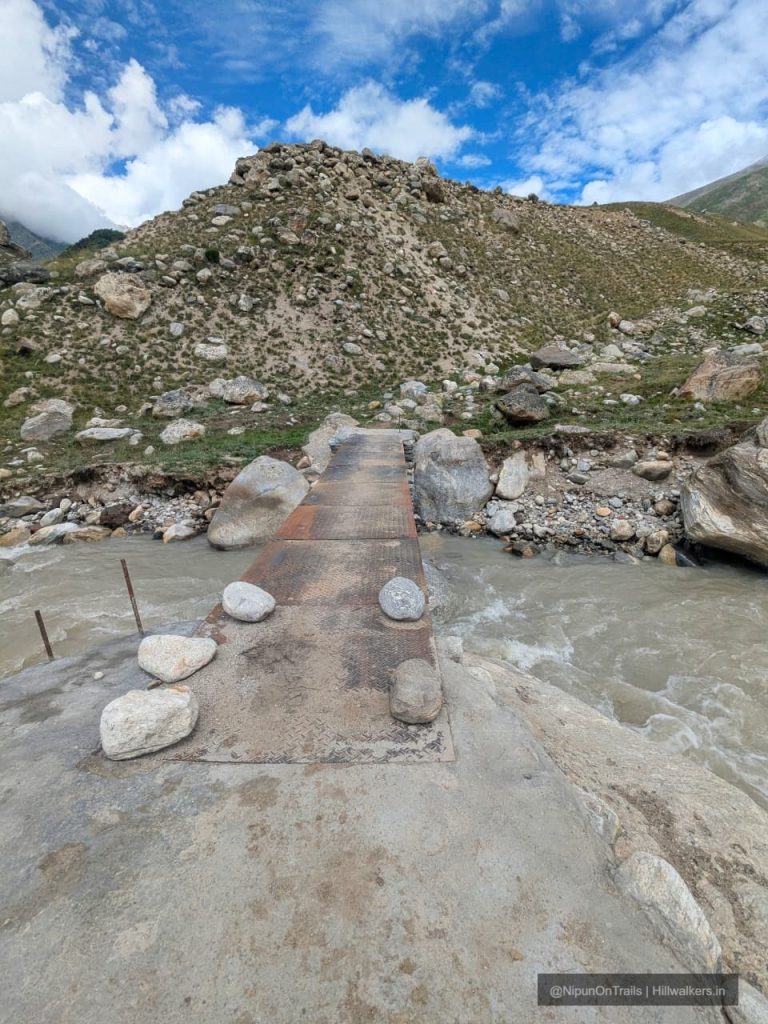
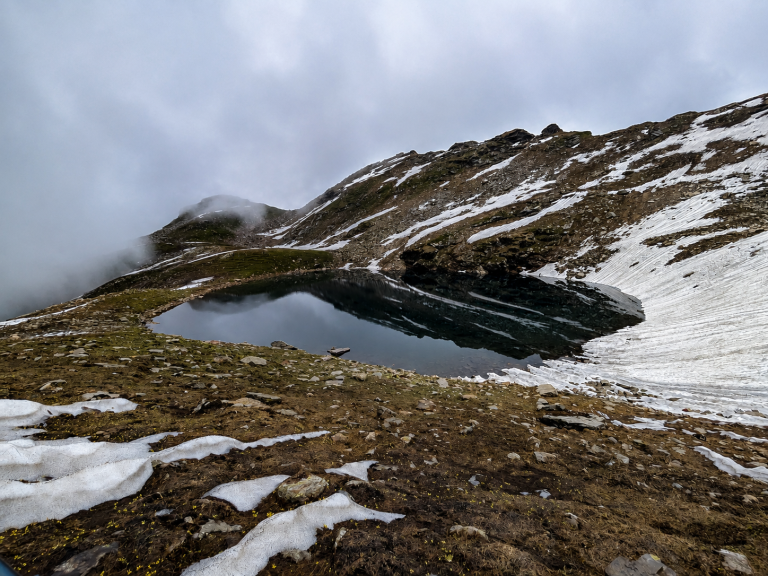
I crossed and followed the trail on the other side. It was a steep descent followed by another crossing. After reaching a boulder on the other side, I removed my shoes, took out some water, dried my socks for a while and took a short break to rearrange my thoughts. After that, I started walking again. I realised that there were two routes which eventually met at the same point. I chose the route through Gompa Lake. I had heard that the lake wasn’t very clean, but it actually looked pretty good.
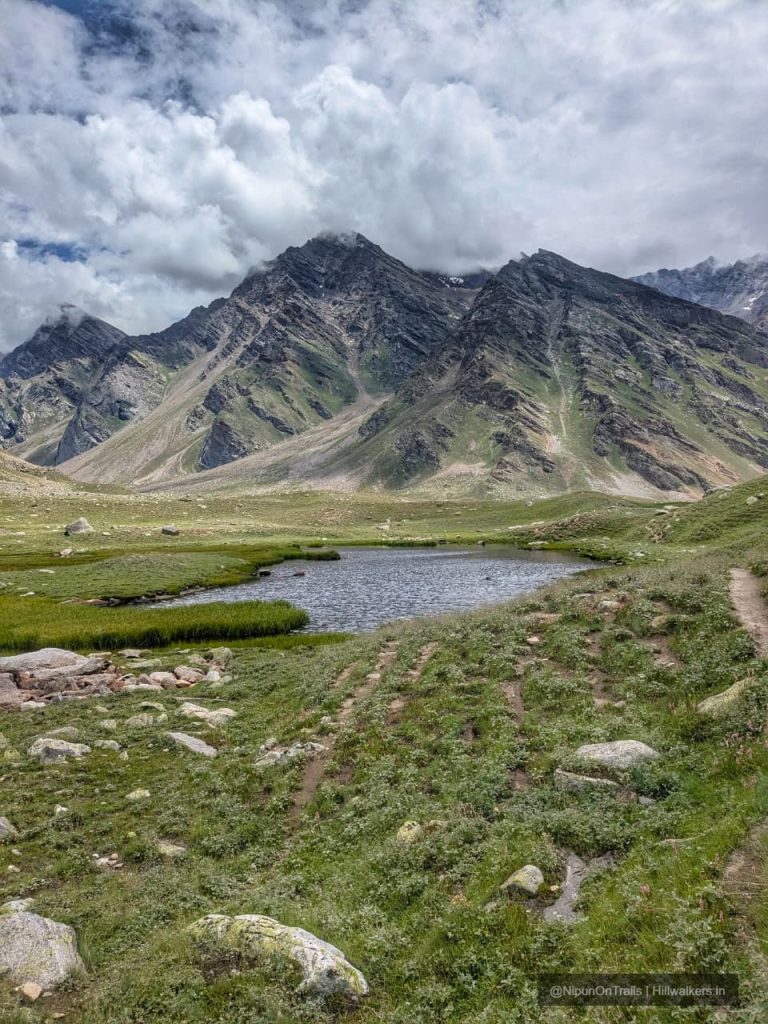
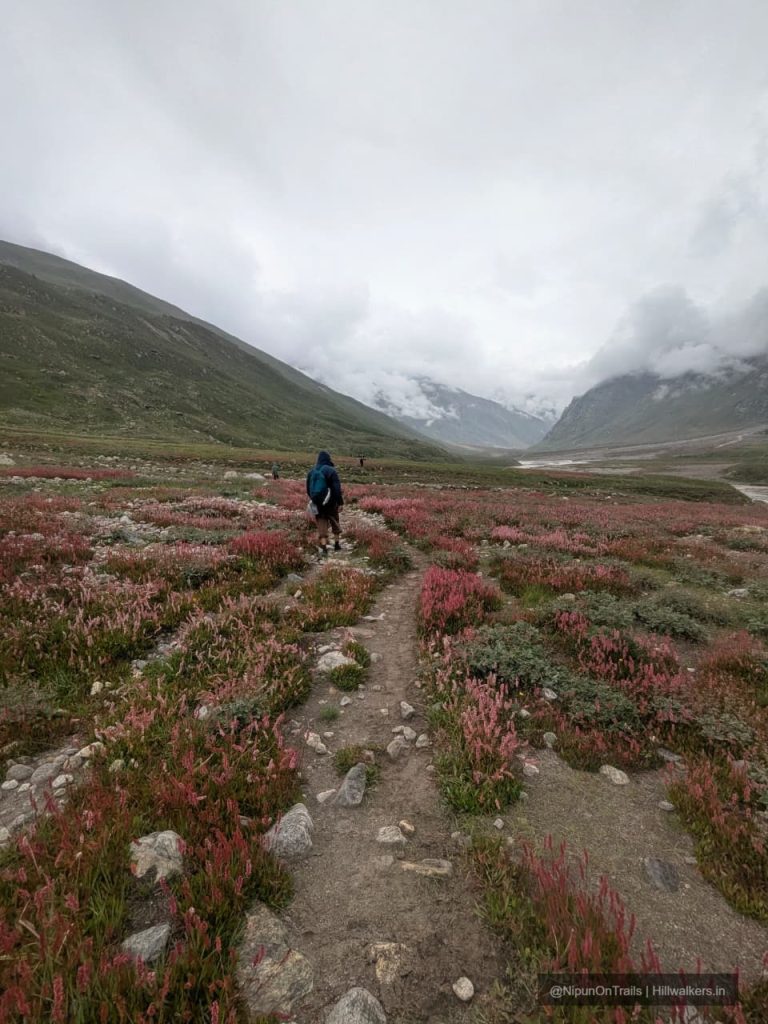
There was still no one around. I was completely alone. I had expected that since the trek was fairly commercial, there would be many trekkers and groups around, but apart from the staff of one group, I had hardly met anyone. It was already around noon. I kept walking and enjoying the landscape. The valley was beautiful, with grasslands, wildflowers and the trail sometimes passing close to the Miyar River. It was a very pleasant walk and I didn’t feel tired at all.
After another hour or two, I saw two or three people at one point. They seemed to be struggling and one girl wasn’t feeling well. I initially thought the last person was the group leader, but he wasn’t. I spoke to the girl and asked her in detail about her symptoms. I also checked whether she had enough water and food. After understanding the situation, I gave her Electral and asked her to drink it slowly, sip by sip. Their campsite wasn’t far, so I moved ahead.
A little further, I saw two guides or group leaders sitting ahead. One of them was wearing a Hanifl jacket and resting with his cap over his face. Then I realised it was Harsh, whom I had met during my WFR course. He didn’t recognise me at first, probably because he wasn’t expecting to see me there. I sat with them for a while and we spoke. We could also see the weather changing. It became cloudy and darker clouds started coming in, so we decided to move together.
Harsh asked me to camp near their group, and I came to know that Pinky Aunty was with them too. We reached Zardong around 2 PM. I still had enough time to continue, but I decided to camp there for the night. I met the staff again, set up my tent and Harsh and the others offered me food. I wasn’t hungry as I had eaten enough earlier, so I just had some snacks. Then I met Aunty. She introduced me to the family members who were travelling with her.
I had initially thought she was guiding the group, but later came to know that this was actually her first time trekking this far into the valley. She had previously come till Gompa, but this was her first time going ahead of it. She was very happy to finally see the places she had heard about for years. She also insisted that I stay with their group instead of going solo.
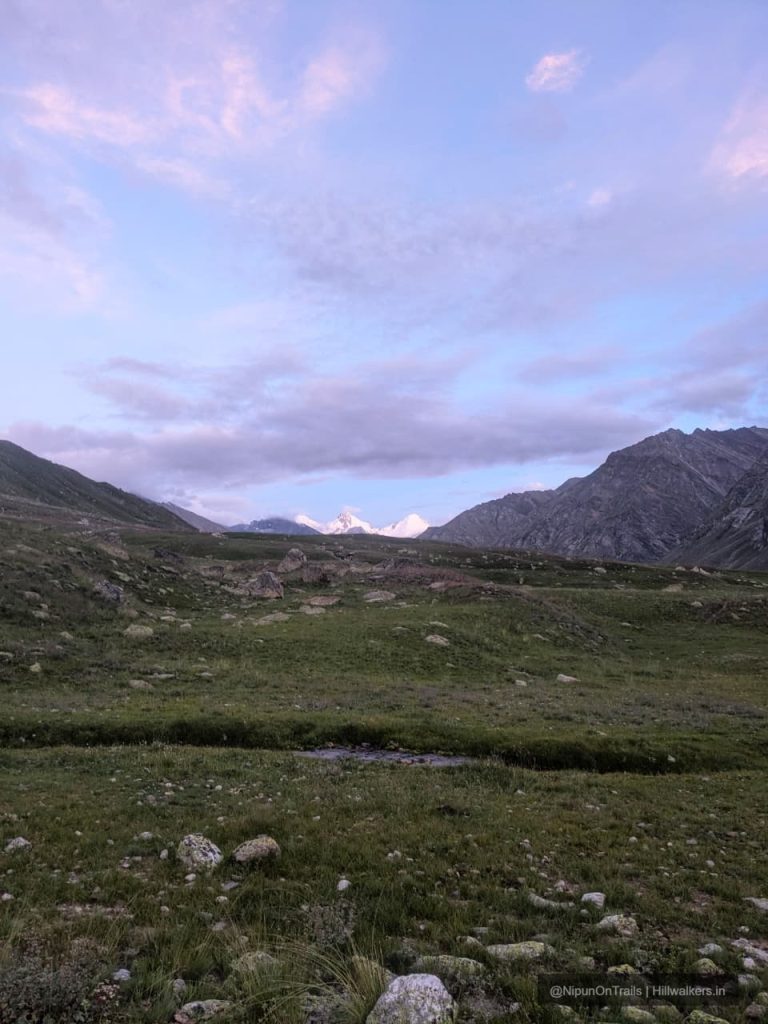
After setting up my tent and meeting everyone, I went towards the river and sat there for a while. It started drizzling again, so I returned towards the campsite. I spent some time in the kitchen with the staff and started getting to know everyone. They were playing cards. Initially, I was just watching because I didn’t know what they were playing. The day passed really well. I wasn’t even a little tired. It felt fresh. After dinner, I went to sleep.
The next morning, I woke up around 7 AM. Everything outside was wet because it had rained during the night. I waited for my tent to dry while having breakfast and packing my things. The group had already left, so I started before the staff who were following with the loaded horses. I wanted to stay ahead in case I needed support at any of the crossings further ahead.
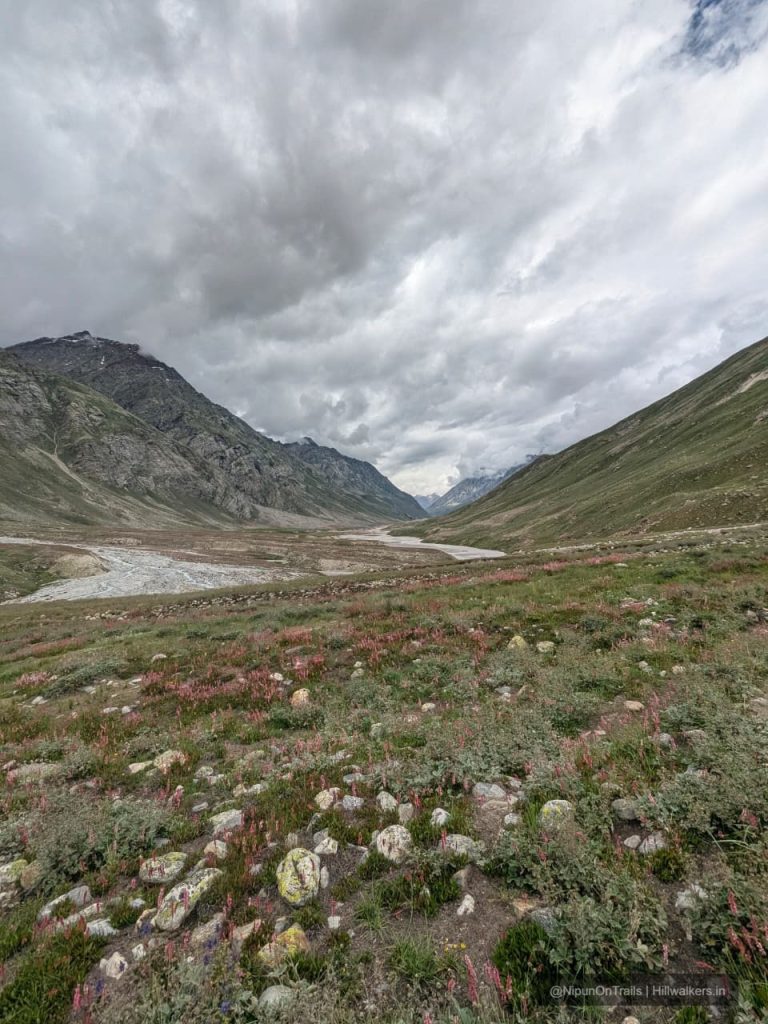
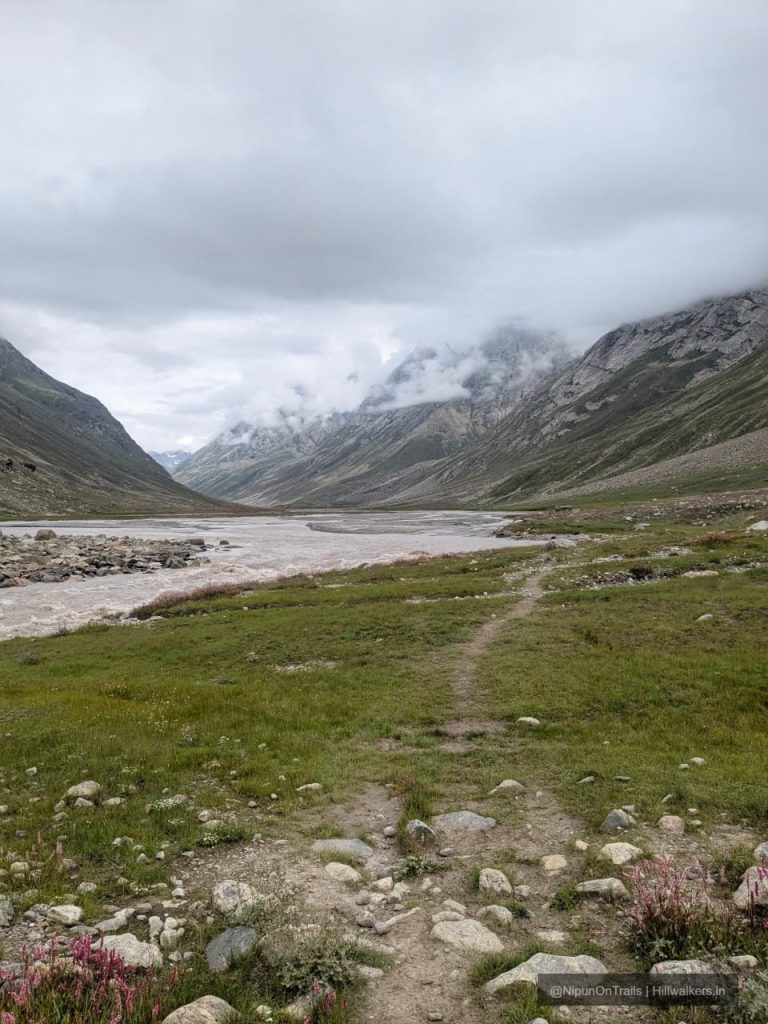
Most of the trail was now going alongside the Miyar River. Some sections were muddy, so I had to be careful. I didn’t want to get my shoes too dirty and wet because drying them in those conditions would be difficult. After a while, I started seeing people coming from the other side. I spoke to some guides. Some wished me well, some warned me about the crossings and some specifically told me not to cross barefoot because the water was extremely cold.
Later, I met Sahil from Bikat, who was leading a group. We had some conversation and he showed interest in backpacking. We exchanged numbers to plan some treks in the future. I moved ahead and met Guri, whom I had met a few days earlier on the Hampta Pass trail. He clearly told me that the water levels at the crossings were not very easy to cross. I was actually relieved after hearing that because at least I knew what to expect.
The crossing was just ahead. There were multiple streams. Some were knee deep, but the current was manageable. I removed my shoes, wore my slippers and started crossing. I could immediately feel how cold the water was. It was freezing. After every section, I had to stop and warm my feet before continuing. I quickly crossed the last two sections and rubbed my feet against some small rocks to warm them up. The next campsite wasn’t far, so I decided to keep my slippers on and continue walking.
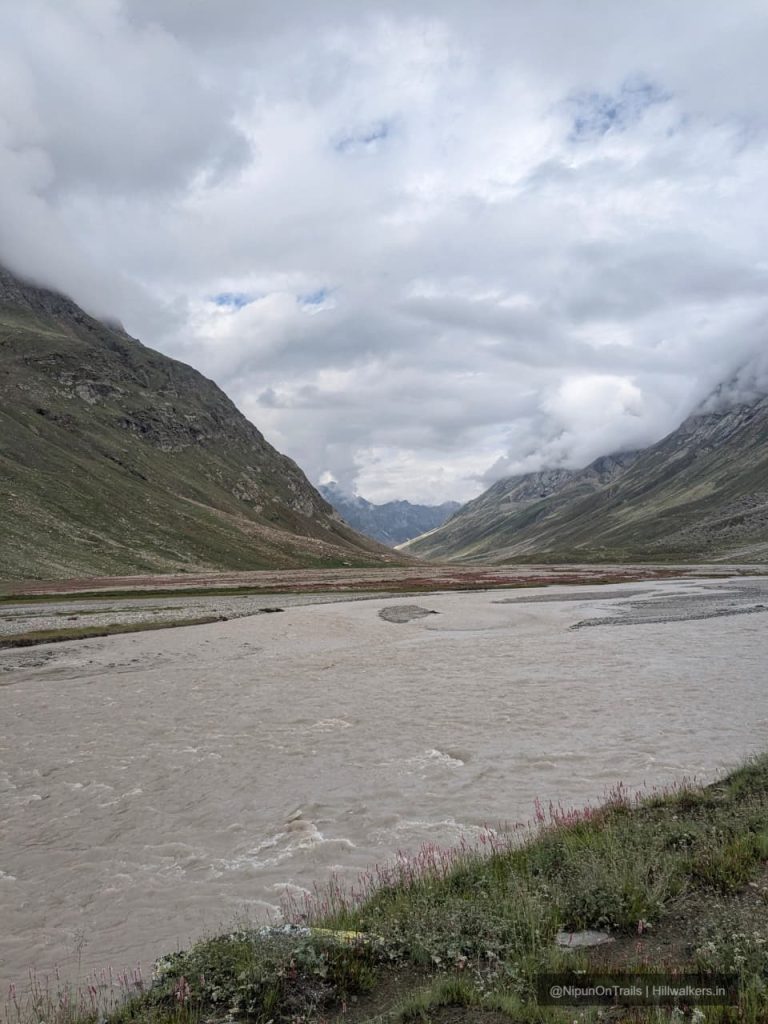
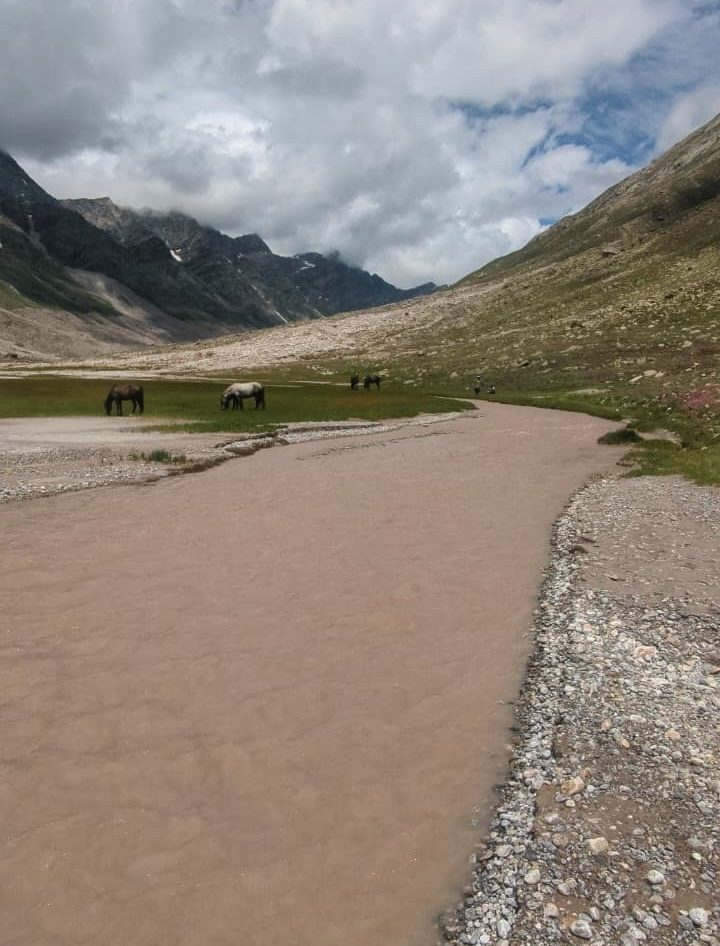
Just ahead, I saw Harsh and Kapil, who were leading groups. I sat with them for a while and then walked with them till the Phalpu campsite. I was thinking of going ahead and camping before the glacier. I discussed it with a few people, including Kaku bhai, who was a guide with their group. But I was warned that the weather could change and there were some nalas ahead which could make my return difficult. The shepherds there had also already left, so if the weather changed, it could become difficult. When you are alone, once someone puts such a possibility in your mind, it does affect your decision. I chose to stay at Phalpu.
I went towards the lakes with them. It was a short walk, but there were a few water crossings, so I continued in my slippers. Kaku bhai showed us the Seven Sacred Lakes. One of them had dried up. He also told us the local story about water from these lakes being offered to the king. While they were waiting for the rest of the group, I went further towards the last lake, which was close to the glacier region. I also wanted to see the Kang La trail. The Kang La trail was towards the right and slightly away from where we were. To reach the last lake, I had to cross moraine and climb over some boulders.
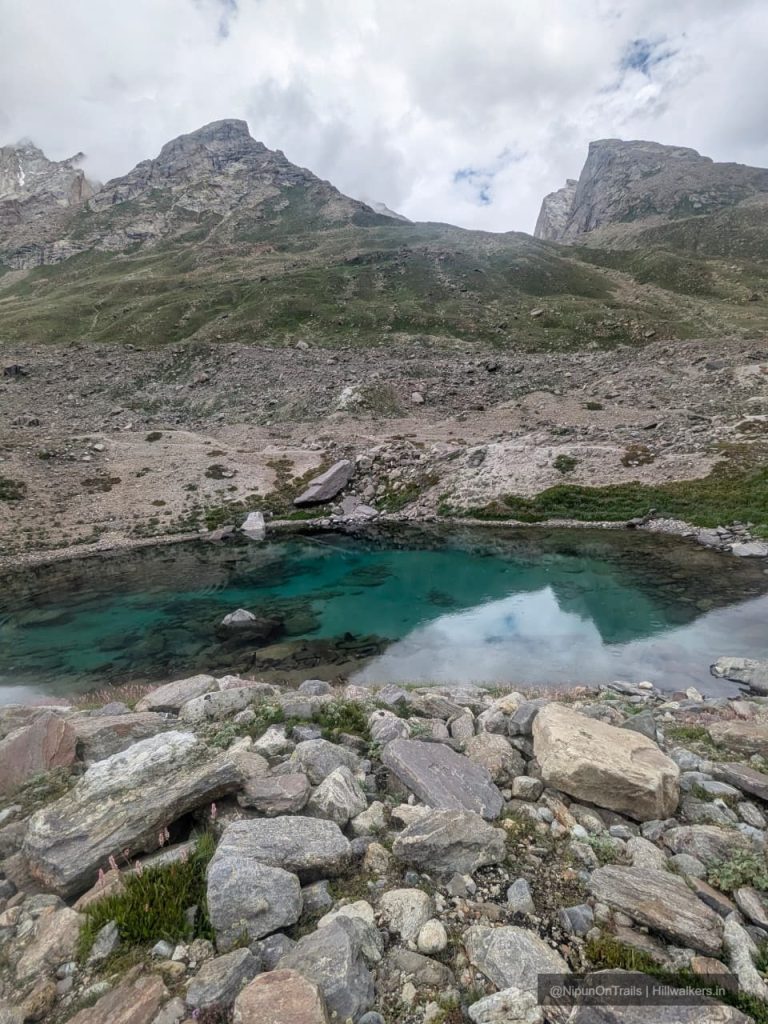
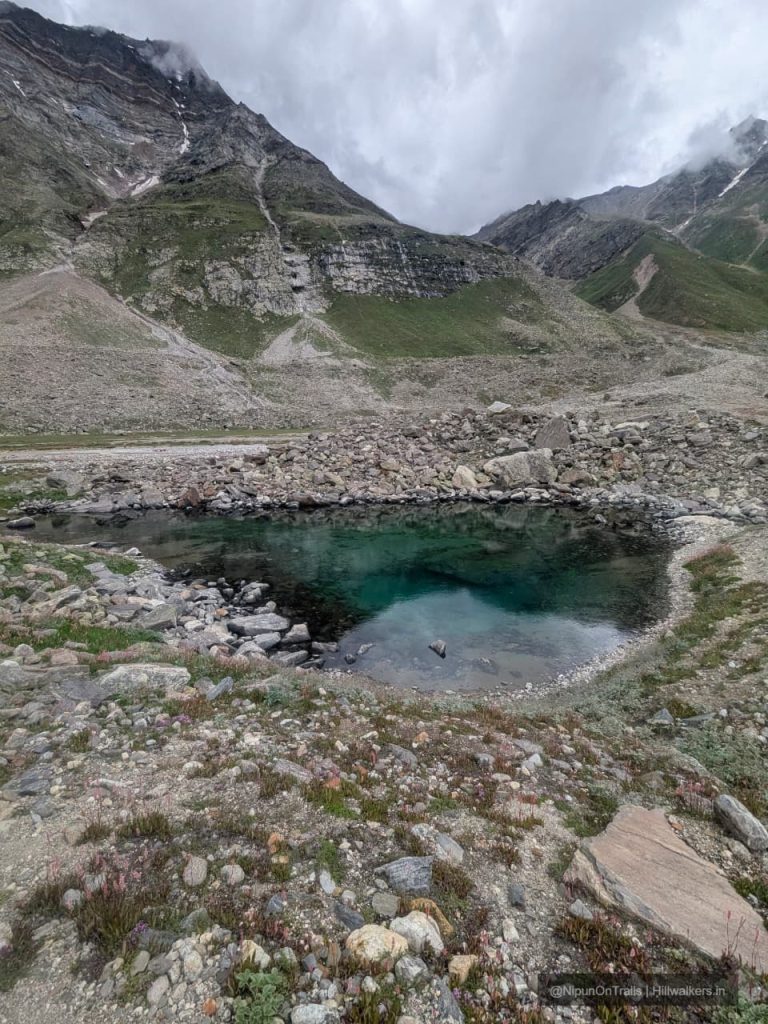
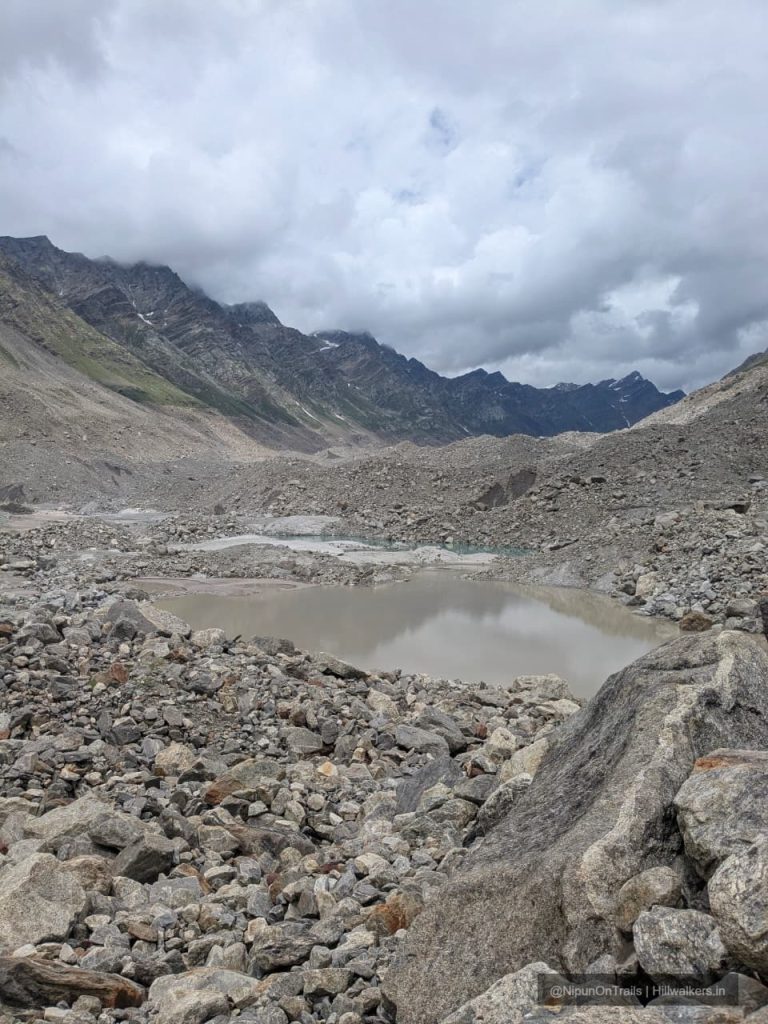
I came back and the group had already left, but I caught up with them after a while. When I reached the campsite, I started setting up my tent. There were two shepherds nearby. While talking to them, I came to know that one of them had his tent near the glacier on the Kang La trail.
I was a little disappointed. If I had known this earlier, I might have gone ahead and stayed there.
He asked me to come with him as he was leaving. I thought about it for a while. I was confused, but I had already walked enough for the day. Going another four kilometres while carrying my backpack could have been overwhelming. So, with a heavy heart, I said no and thanked him. I offered him a bidi that I had carried for the shepherds and continued setting up my tent.
After a while, it became windy and started drizzling. I kept everything inside the tent and then went to Harsh’s group’s kitchen tent. It started raining heavily and the wind picked up. It was getting colder. The staff and some others were playing cards while some were listening to music. Somehow, the time passed and it became dark. I came out to check my tent, went back inside and fell asleep.
The next morning was supposed to be my return to Shukto. I was thinking whether I should go directly to Shukto or camp at Gompa, where Harsh’s group would be staying. Aunty asked me to come with them and stay at Gompa, so I couldn’t really say no. I started late because I wanted my tent to dry, but instead it started drizzling again.
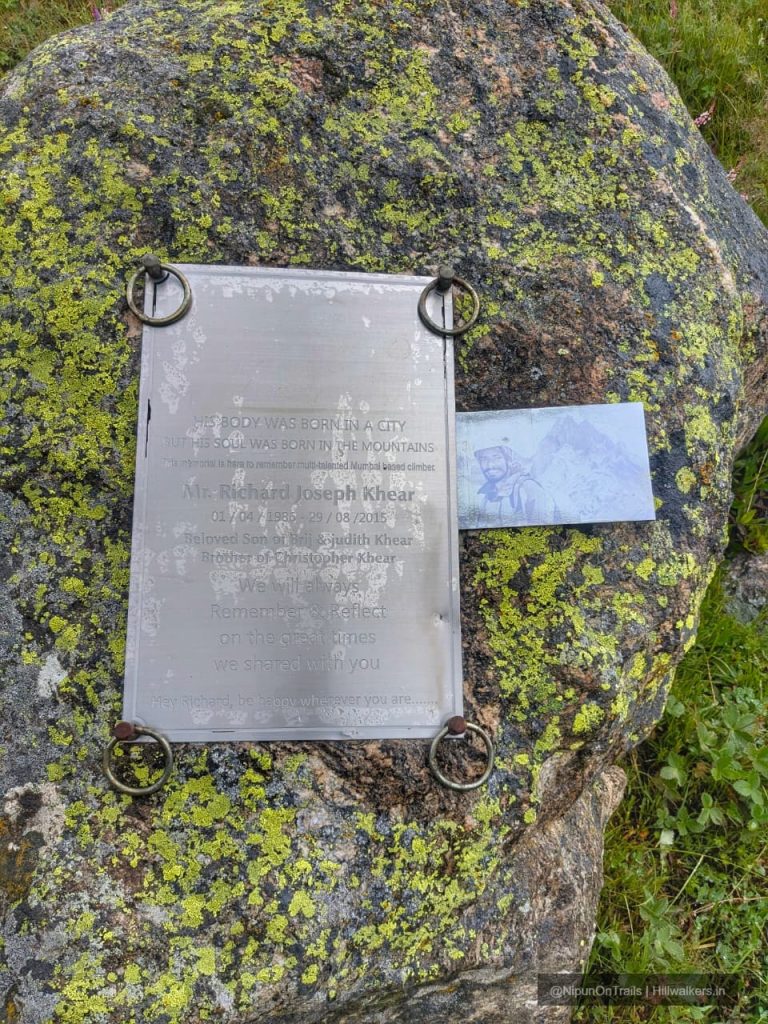
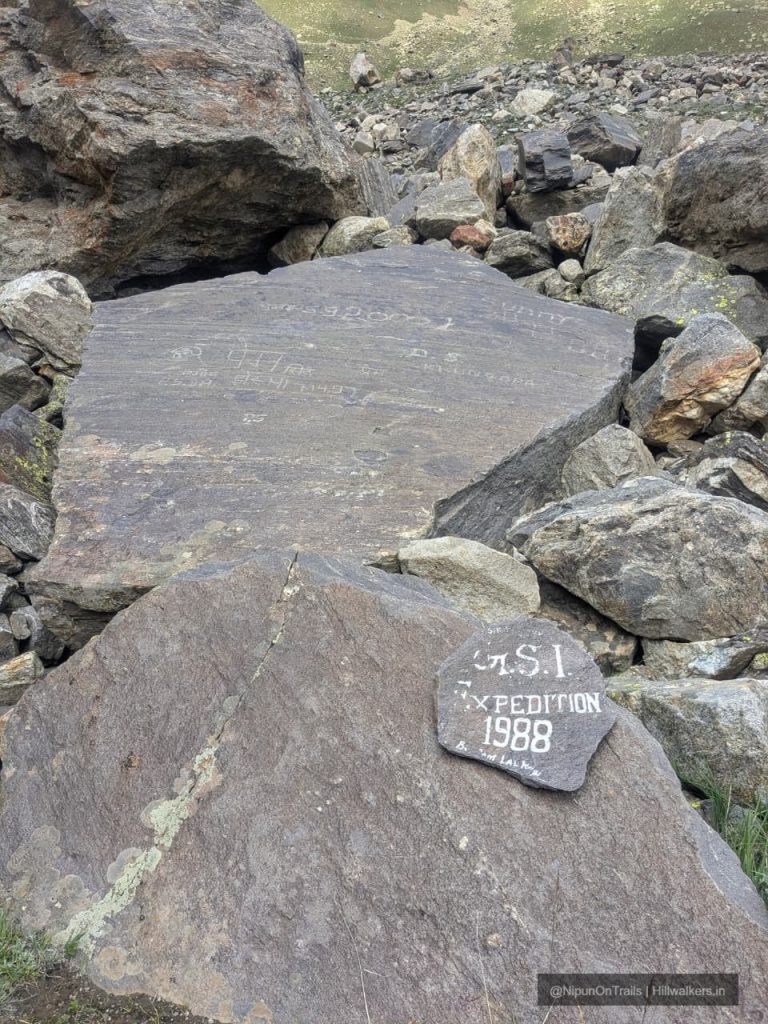
Meanwhile, I checked the memorial of Mr Richard Khear, a Mumbai based climber who lost his life in 2015 during a climbing expedition. Miyar was known among many foreign climbers for climbing expeditions, with peaks such as Tharang, which is above 6000m, Toro at around 4800m, and many others.
After a few minutes, I took my backpack and started walking with the team. Their trekkers had already left about an hour earlier. Near Zardong, it started raining again. I took out my umbrella, but it wasn’t enough as it was getting cold and windy too. I put on my raincoat and continued walking. Around 1:30 PM, I reached the Gompa campsite. The group staff arrived with the horses and started setting up the camp. I pitched my tent a little away, on the opposite side of the stream.
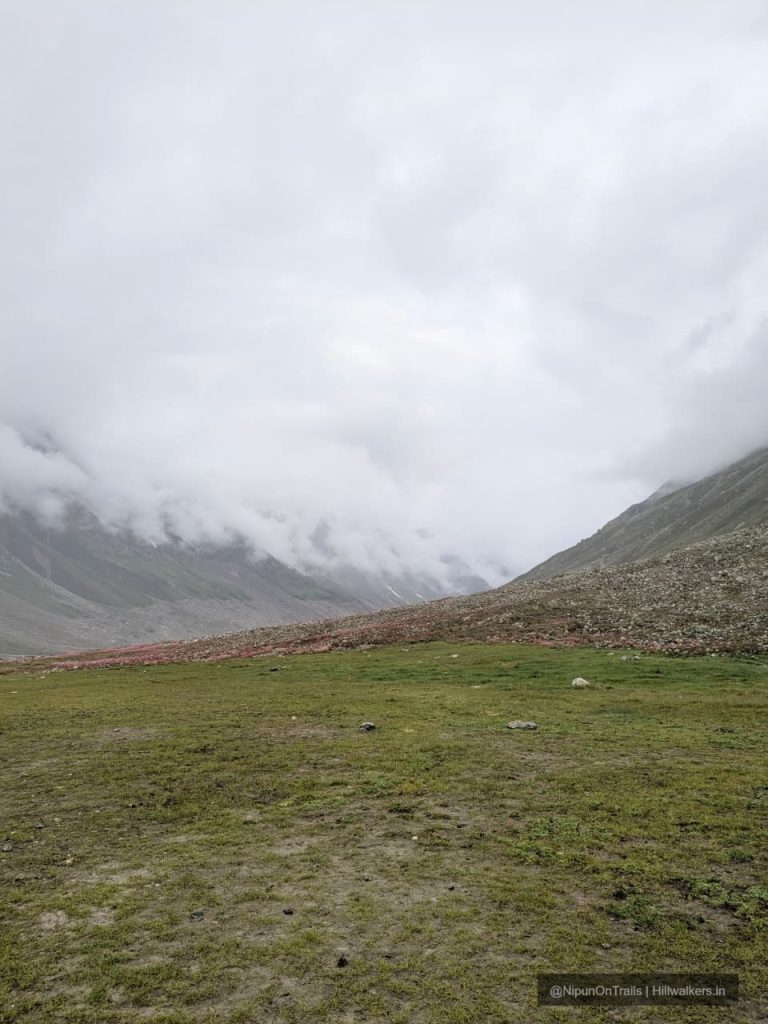
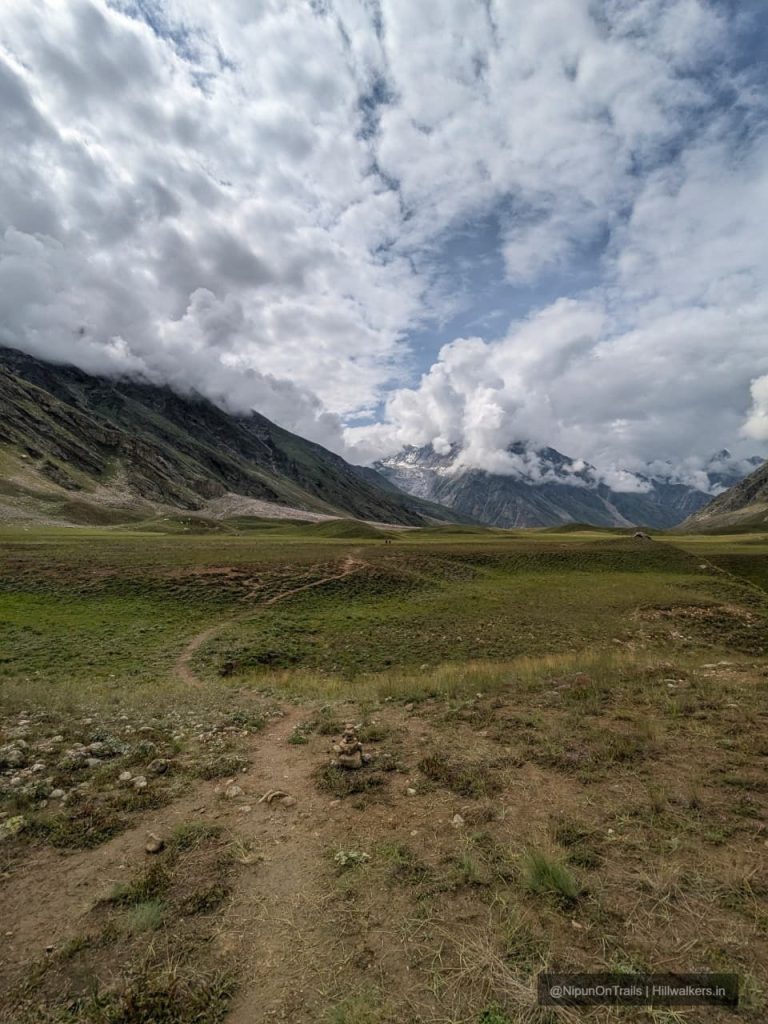
I rested for a while and was about to come out when Kaku bhai saw me and asked, “Let’s go to the shepherd’s hut nearby.” We went together. The hut was made by stacking stones, and when we were invited inside, I was amazed by how well it was built. It had a small window, places to keep things and even an opening for ventilation and cooking.
The shepherd’s name was Lehru Ram ji, and he had a young boy with him. He was very kind and had lots of stories to share. He had studied well and used to drive a vehicle, but a few years ago he started coming with the sheep to continue the family tradition. He offered us tea. I don’t drink tea, but I couldn’t refuse him. After spending some time there, Aunty and Didi also came. The hut had enough space for all of us. Lehru Ram ji offered tea again. This time I said no, but he didn’t listen.
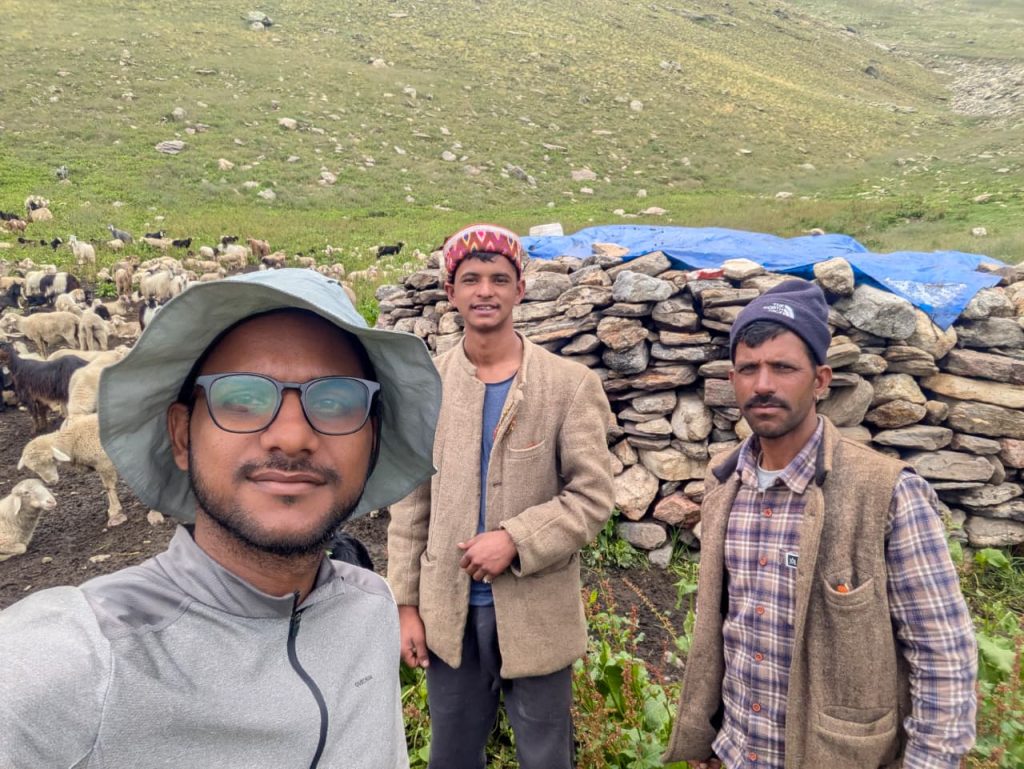
After some more conversation, it was time for them to gather their sheep. We wanted to see how they gathered them and called them back. They had specific whistles to call their sheep, and different types of whistles to communicate with the other shepherds. That was interesting to watch. As soon as they started whistling, the sheep started moving down and gathering at a particular place. Lehru Ram ji went further up to check whether all the sheep were coming down. He explained that when it rains or the weather changes, the sheep often gather nearby and stay there. The boy explained to us how they usually call the sheep and how they respond. After a while, all the sheep gathered at a place just above the hut. Lehru Ram ji then guided them towards the hut. There was some tall grass and shrubs on the way, so the sheep hesitated to make their way through. It was interesting to watch the whole thing. Later, we said goodbye and went back to camp. I had dinner and went to sleep.
The next day, it was time to return to Shukto.
I woke up late. By the time I woke up, Harsh’s group had already left and everything was packed. I had breakfast, packed my things, met Lehru Ram ji once more and started walking towards Shukto. After walking for a while, one of the kitchen staff (Sange Bhai)joined me. He was a local from a nearby place. We kept walking and talking about different things when suddenly he asked me,
“What is responsibility according to you?”
I paused for a few seconds. I wasn’t expecting that question from him. I gave him my answer and explained it with a few examples. He agreed with what I said and then told me where the question had come from. We kept exchanging thoughts while moving. Now, We could see the shepherd’s hut where I had met them while coming, so I said, “Let’s go from their hut and say bye.” We went there and they offered tea again. This time, I successfully said no.
After a while, we moved on. Before leaving, we asked about a route that went closer to the river and could help us avoid some of the climbing. Since the Sange Bhai was local, he also had some idea about it. After crossing a bridge, we passed the Stupa and entered the mutter farms to access the trail below. This route isn’t commonly used by trekkers. It also had a wooden bridge crossing which looked a little scary. We crossed the trail and could see some landslides as well.
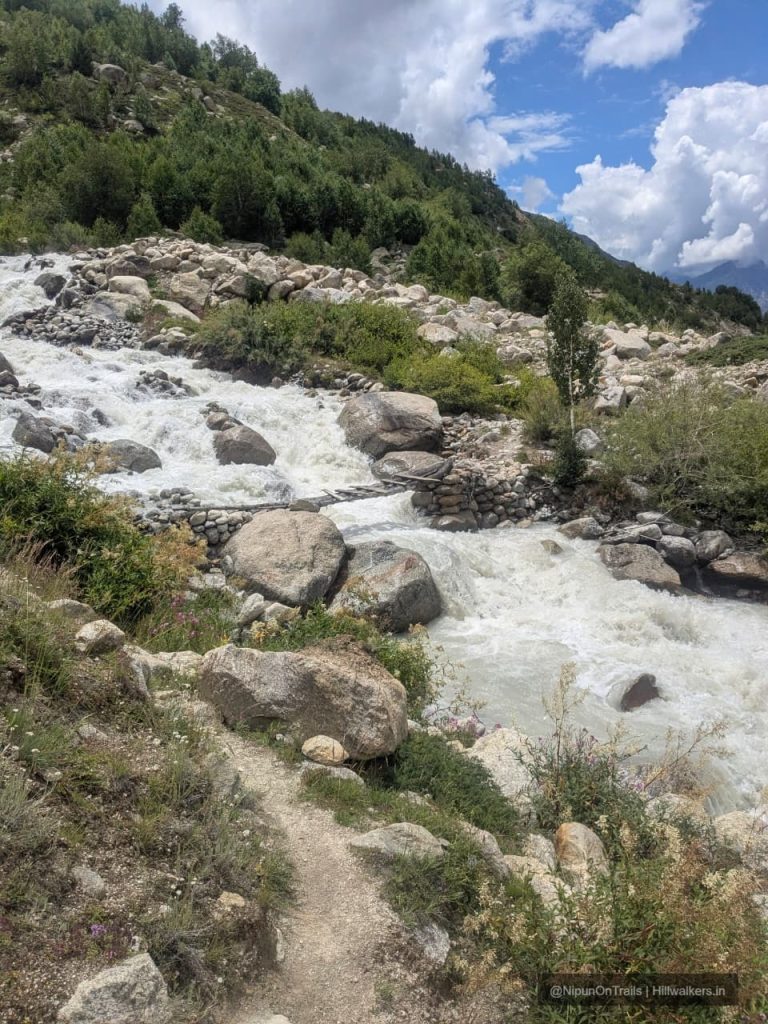
After walking for a while, we reached bridge, and I could understand why this route wasn’t commonly used. Sange bhai crossed first. He had nothing with him. I threw my trekking pole across and then tried to walk over the bridge with both feet while carrying my backpack. I quickly realised that this wasn’t a normal bridge and understood why everyone was crossing it while bending down. I lowered myself and moved ahead. My backpack wasn’t allowing me to look up properly and was hitting my neck, but I crossed quickly. It was a good experience. It felt manageable, although I think it would have been much more comfortable without a heavy backpack.
Within another 10 to 15 minutes, we reached Khanjar. From there, we went through the farms and took a shortcut to reach the main bridge and then Tashi Homestay. Only the group’s staff were there. The main group was still behind us, so I thought we had probably skipped them by taking the shortcut.
I waited for Harsh to arrive so I could decide whether to leave that day or the next. He had told me to stay for a day and that we could leave together the following day, so I stayed.
The next day, I said goodbye to Aunty and her family. I told them I would come again, either just to meet them or for Kang La. Harsh left with me too. Suraj bhaiya came to drop us till Karpat Nala.
On the way, there was a tractor which had somehow moved from its place and ended up lying horizontally across the road. We tried everything. We looked for the driver, Suraj bhaiya tried starting it, and his friend started calling different people to find the owner. Eventually, they found him. After some time, the driver came and managed to start the tractor with a scissor mechanism. That was another unexpected but fun part of the journey.
We reached Karpat Nala, crossed it using the trolley again and took a different vehicle from there towards Udaipur. From Udaipur, we finally made our way back to Manali.
Miyar Valley was a really good experience. The beautiful landscapes, the trail along the river, freezing water crossings, grass covered valley and wildflowers made the entire journey scenic. I went there alone, but met so many people along the way, from people I had met during my WFR course to guides and trekkers from other trails, kind shepherds and finally Pinky Aunty and her family, who made me feel at home.
I didn’t have a fixed plan for the valley. I mostly wanted to walk through Miyar, spend time there and see how the days unfolded. Looking back, it was the simple things I remember most: walking along the river, stopping to talk to people, sitting with shepherds, watching the weather change and spending quiet evenings in the valley.